
Report: The take-off in African solar that official statistics can’t yet see
Produced by Ember in partnership with African Tech Futures Lab
KEY STATS
17 GW
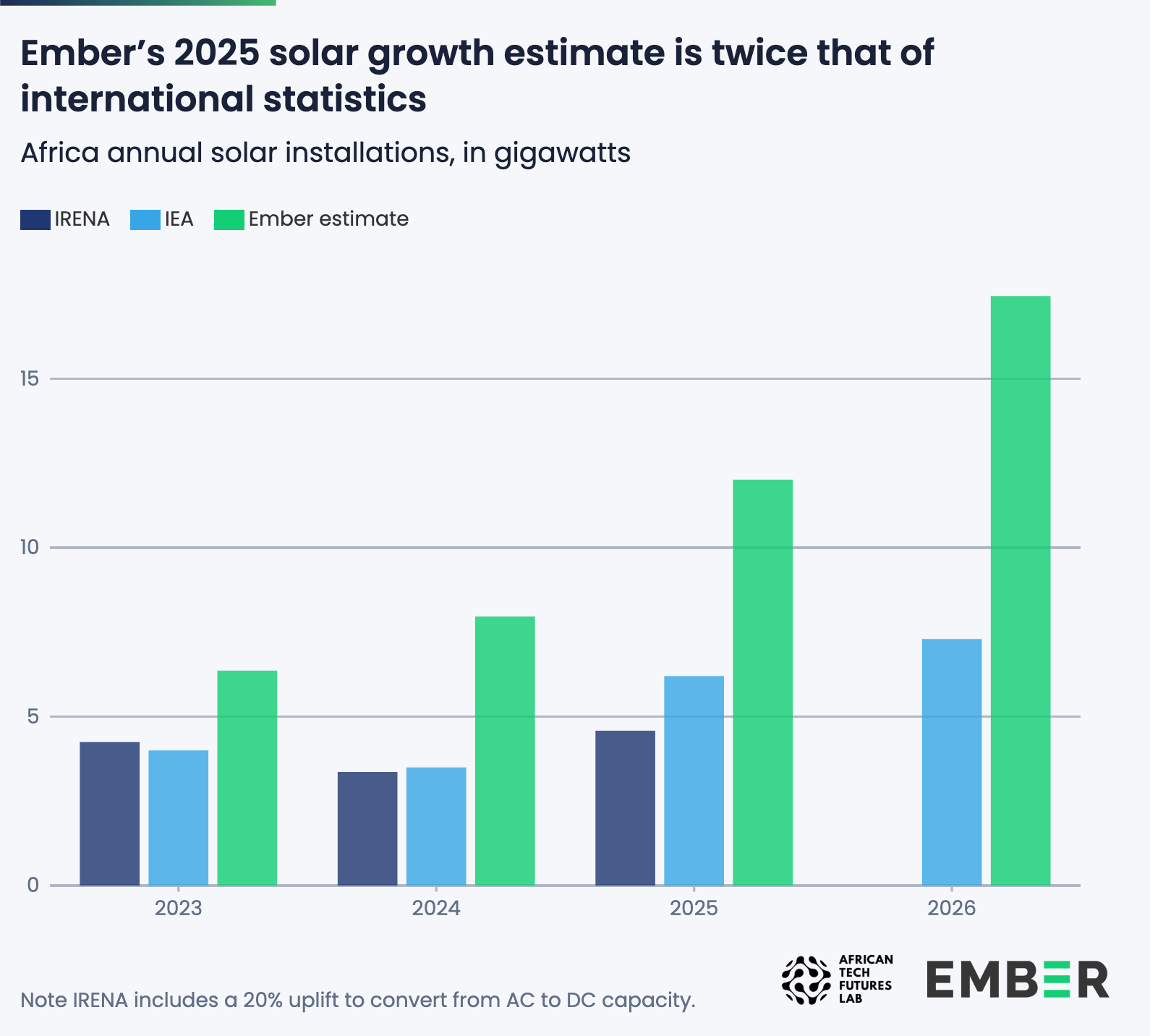
Estimated solar capacity installed across Africa in 2026, up 45% year on year.
100,000
Solar panels installed across Africa every day in 2026.
75%
Share of Africa’s solar capacity additions from 2023–2025 estimated to be distributed solar, much of it missing from official statistics.
Africa installs a record 17 GW of solar in 2026 – three-quarters of it is distributed solar, which is largely invisible.
Africa’s solar market is growing much faster than official statistics suggest. A new report produced by Ember in partnership with African Tech Futures Lab uses Chinese customs data and a new calibrated methodology to estimate solar installations across every African country from 2023 to 2026.
The analysis estimates that Africa will install a record 17 GW of solar in 2026, up 45 percent from the previous year. Much of this growth is happening outside the utility-scale projects that are easier to track. Distributed solar is estimated to account for three-quarters of the solar capacity added between 2023 and 2025, yet only 12 African countries report an official or semi-official distributed solar figure.

A changing power system
The scale of distributed solar is already changing how electricity is supplied and used across the continent. In many countries, households and businesses are adding generation directly at the point of consumption, often in response to unreliable grids and high electricity and diesel generator costs.
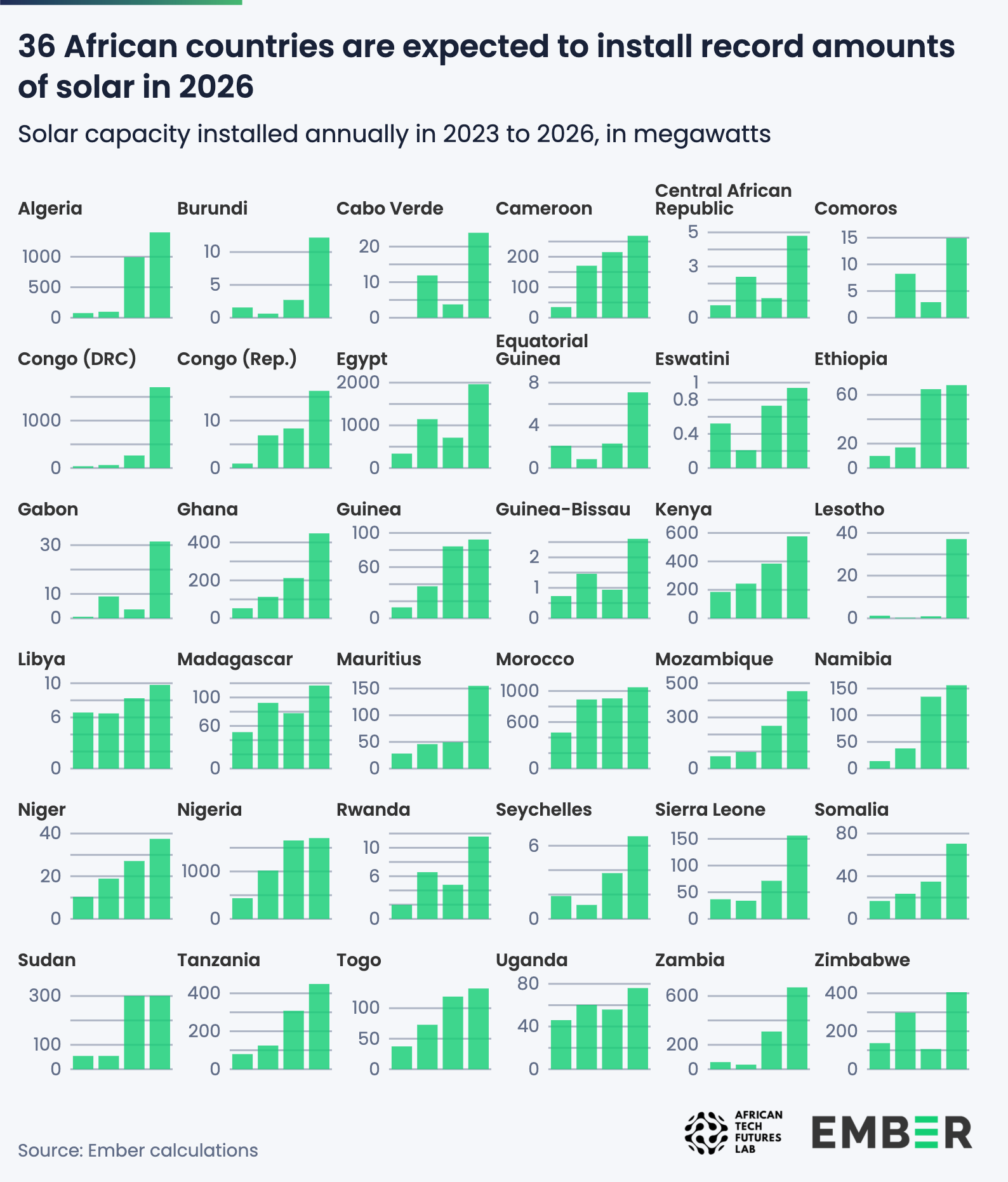
But national data and planning systems have not kept pace. Official solar capacity data is available for only 36 of Africa’s 54 countries, and only 14 reported data for 2025. As a result, governments, utilities and system operators are making decisions with an incomplete picture of how much generation already exists and where it is located.
Why it matters
Distributed solar data is increasingly important for electricity planning. Without it, planners may overestimate future grid demand, procure unnecessary generation or make investment decisions based on an outdated view of the power system. System operators also need better information to manage changes in daytime demand, evening ramps, network congestion and the growing role of battery storage.
The priority now is to improve how these assets are measured, planned for and integrated so that they can support more reliable electricity systems and deliver wider benefits.
What comes next
This report provides a new baseline for understanding the scale and spread of distributed solar across Africa. African Tech Futures Lab will build on this work with additional analysis on the policy implications of distributed solar growth, including what it means for national planning, grid integration, market development and the role of Chinese technology and investment.
Read the full analysis
Download the report here (PDF). The full report, methodology and country-level dataset are available on Ember’s website.
