
-
![Biomass Fast Pyrolysis + Bio-oil Geological Sequestration]()
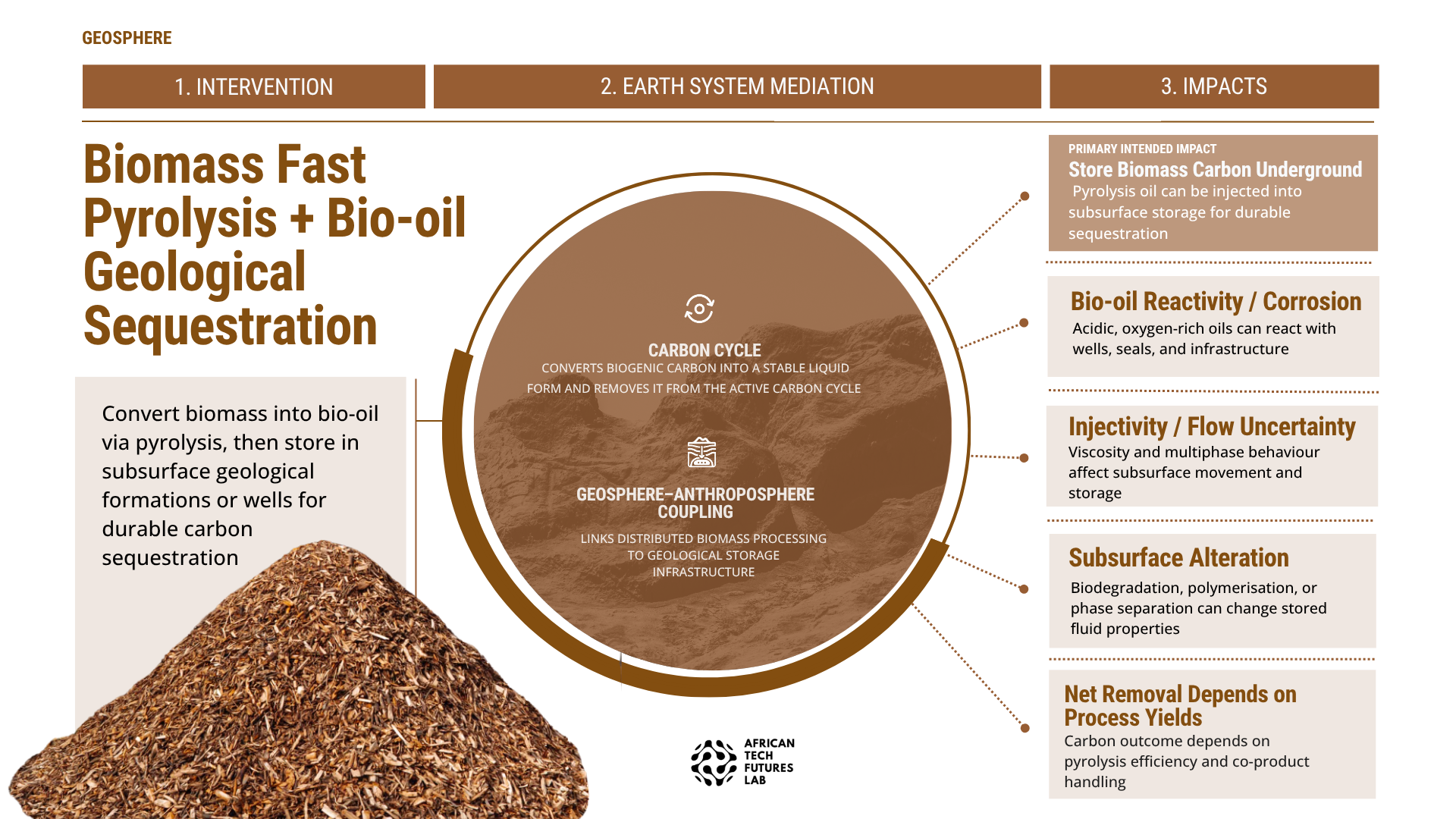
Biomass Fast Pyrolysis + Bio-oil Geological Sequestration
This climate intervention technique works by converting biomass into bio-oil via pyrolysis, then store in subsurface geological formations or wells for durable carbon sequestration, and it would be mediated by the following key Earth systems: Carbon Cycle and Geosphere–Anthroposphere Coupling. A number of impacts and outcomes would be co-produced, including Store Biomass Carbon Underground, Bio-oil Reactivity / Corrosion, Injectivity / Flow Uncertainty, Subsurface Alteration, and Net Removal Depends on Process Yields.
-
![]()
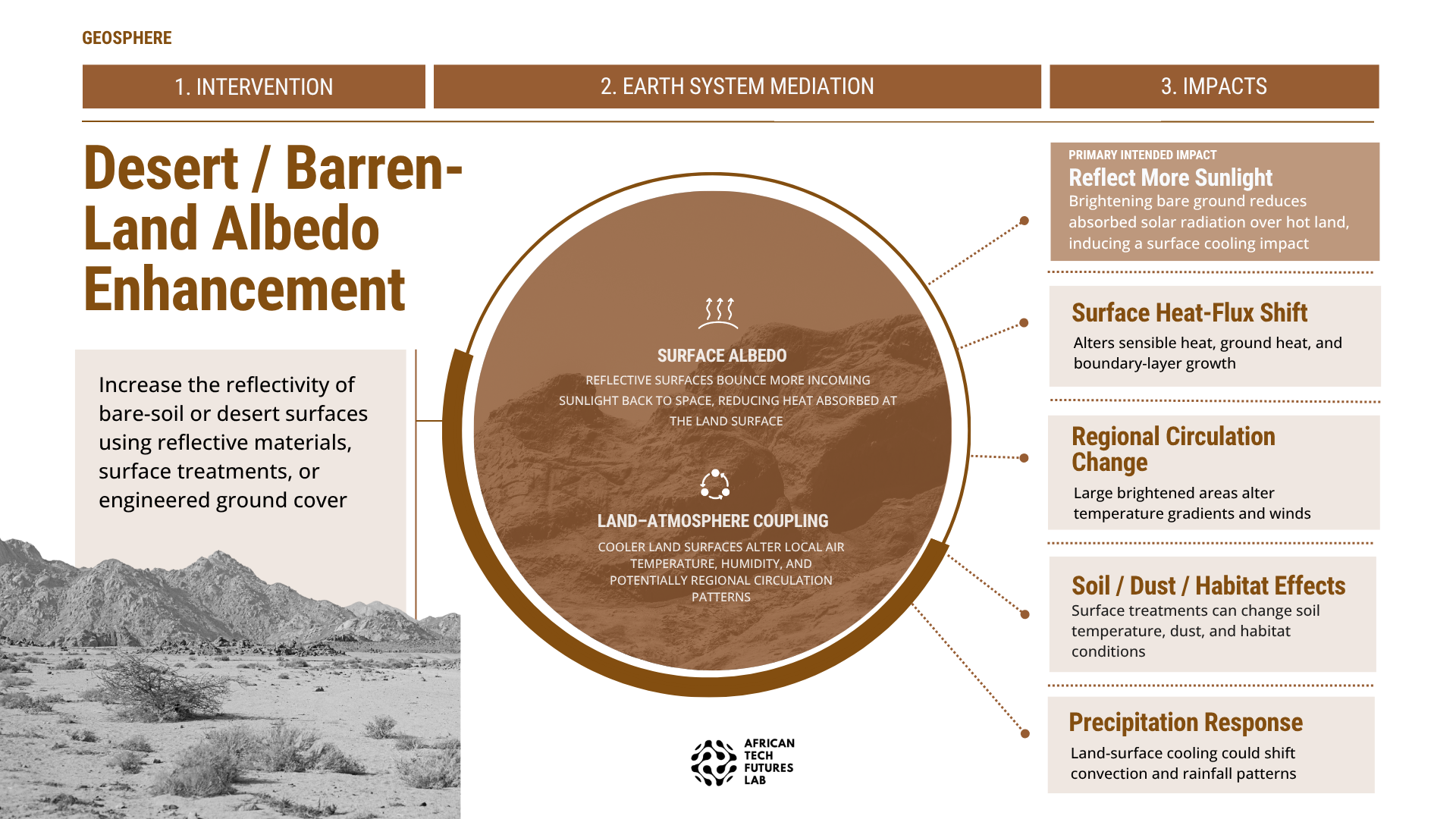
Desert / Barren-land Albedo Enhancement
This climate intervention technique works by increasing the reflectivity of bare-soil or desert surfaces using reflective materials, surface treatments, or engineered ground cover, and it would be mediated by the following key Earth systems: Surface Albedo and Land–Atmosphere Coupling. A number of impacts and outcomes would be co-produced, including Reflect More Sunlight, Surface Heat-Flux Shift, Regional Circulation Change, Soil / Dust / Habitat Effects, and Precipitation Response.
-
![]()
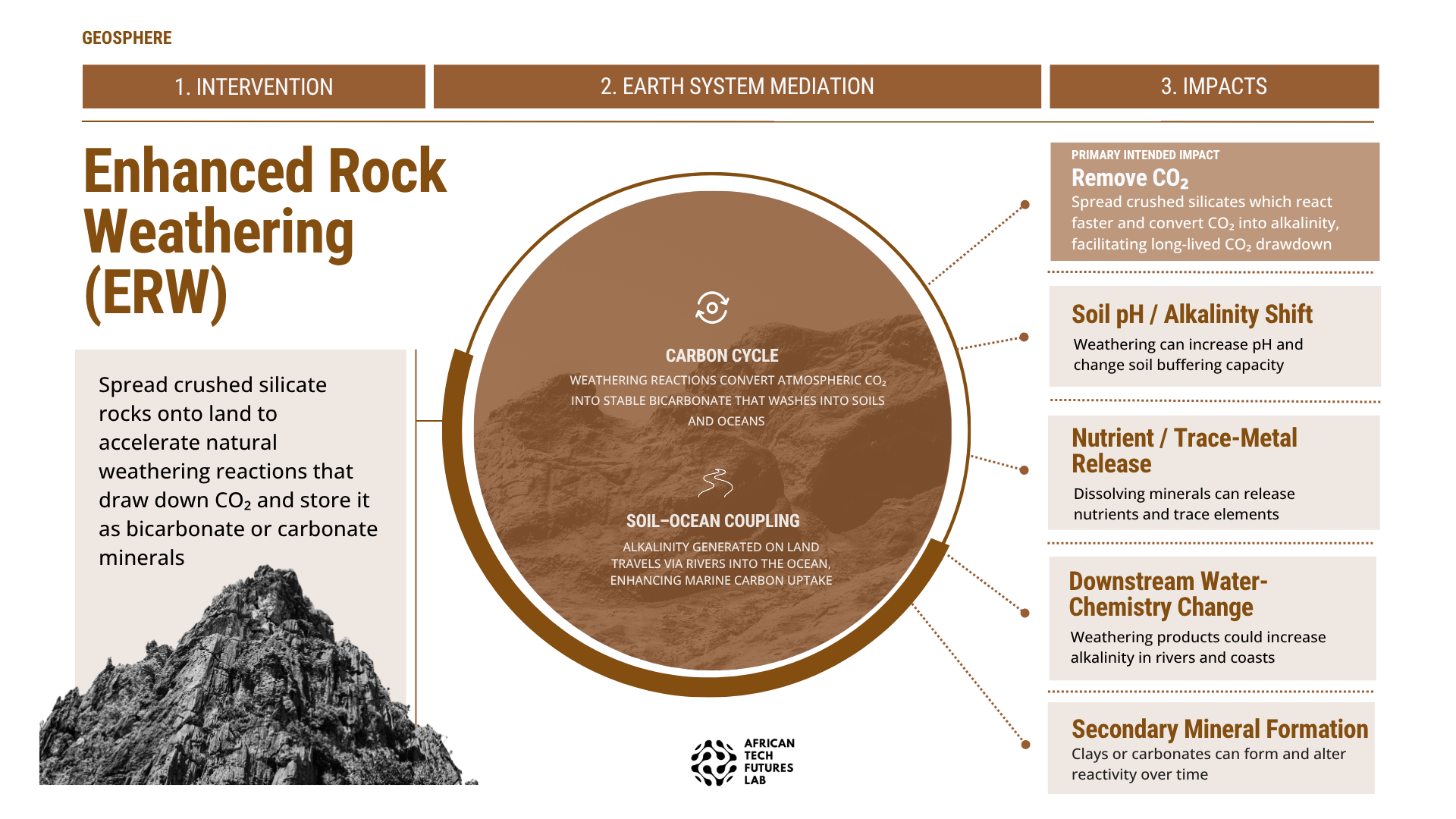
Enhanced Rock Weathering (ERW)
This climate intervention technique works by spreading crushed silicate rocks onto land to accelerate natural weathering reactions that draw down CO₂ and store it as bicarbonate or carbonate minerals, and it would be mediated by the following key Earth systems: Carbon Cycle and Soil–Ocean Coupling. A number of impacts and outcomes would be co-produced, including Remove CO₂, Soil pH / Alkalinity Shift, Nutrient / Trace-Metal Release, Downstream Water-Chemistry Change, and Secondary Mineral Formation.
-
![]()
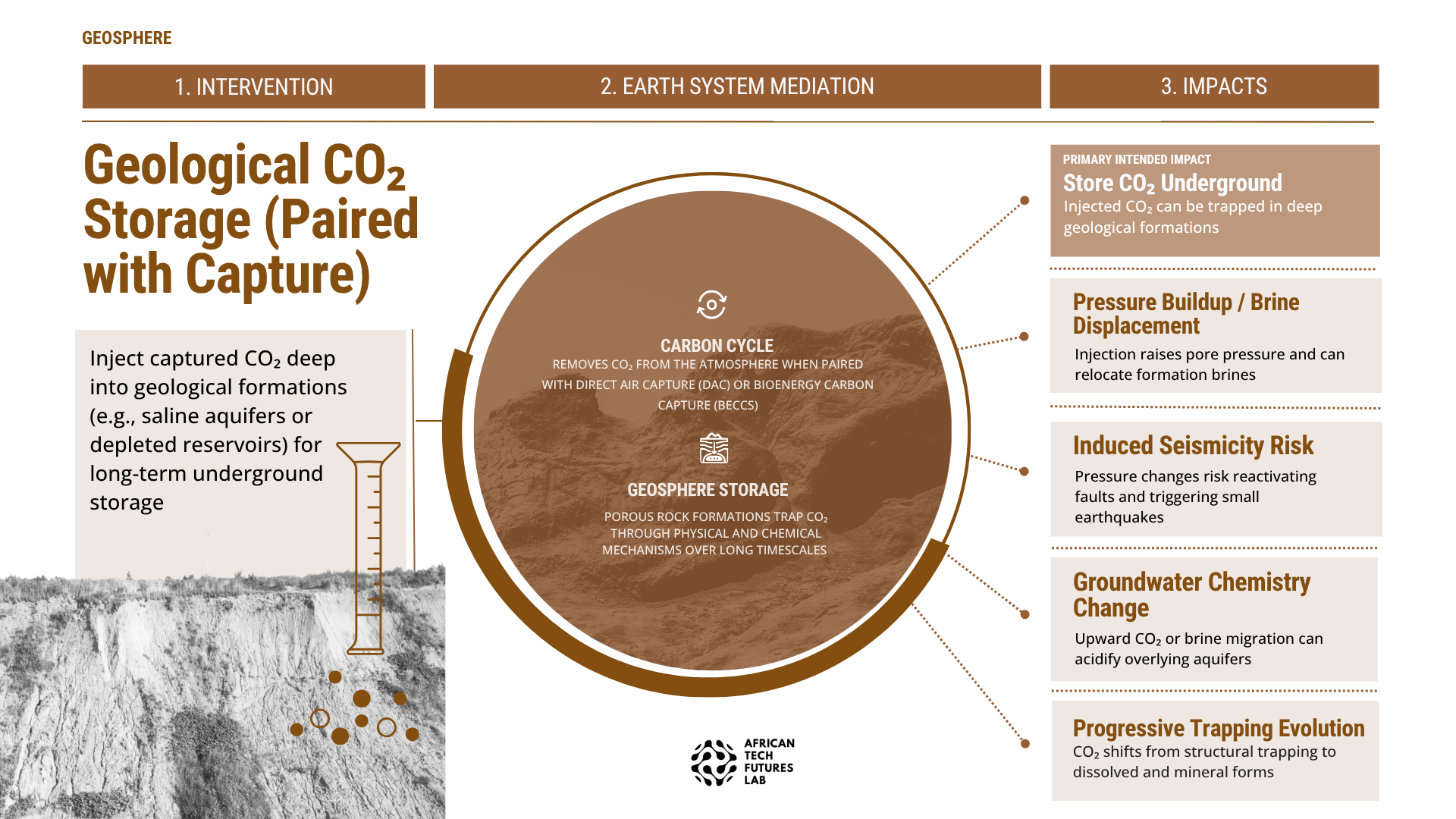
Geological CO₂ Storage (paired with capture)
This climate intervention technique works by injecting captured CO₂ deep into geological formations (i.e., saline aquifers or depleted reservoirs) for long-term underground storage, and it would be mediated by the following key Earth systems: Carbon Cycle and Geosphere Storage. A number of impacts and outcomes would be co-produced, including Store CO₂ Underground, Pressure Buildup / Brine Displacement, Induced Seismicity Risk, Groundwater Chemistry Change, and Progressive Trapping Evolution.
-
![]()
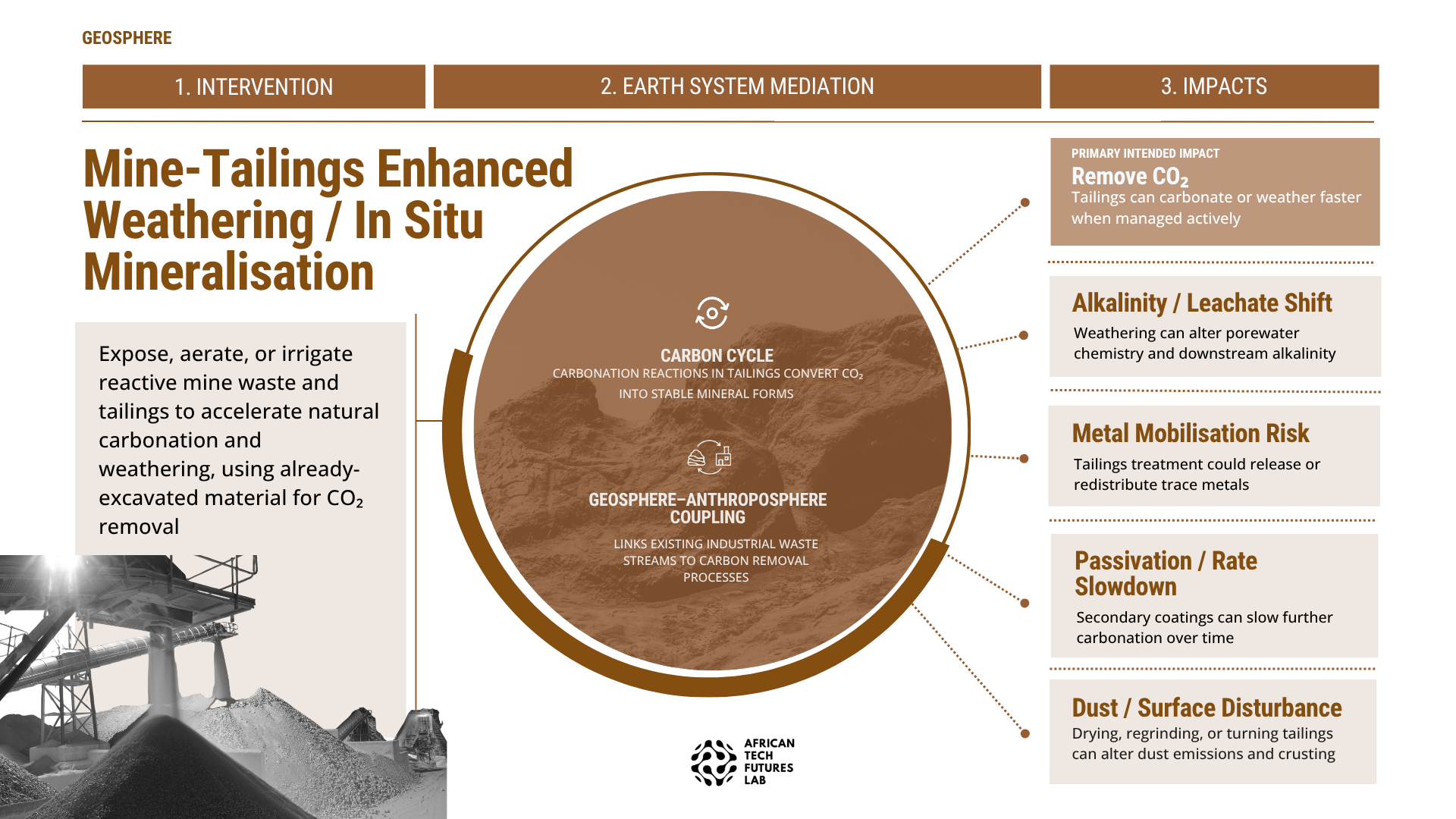
Mine-tailings Enhanced Weathering / In Situ Mineralisation
This climate intervention technique works by exposing, aerating, or irrigating reactive mine waste and tailings to accelerate natural carbonation and weathering, using already-excavated material for CO₂ removal, and it would be mediated by the following key Earth systems: Carbon Cycle and Geosphere–Anthroposphere Coupling. A number of impacts and outcomes would be co-produced, including Remove CO₂, Alkalinity / Leachate Shift, Metal Mobilisation Risk, Passivation / Rate Slowdown, and Dust / Surface Disturbance.
-
![]()
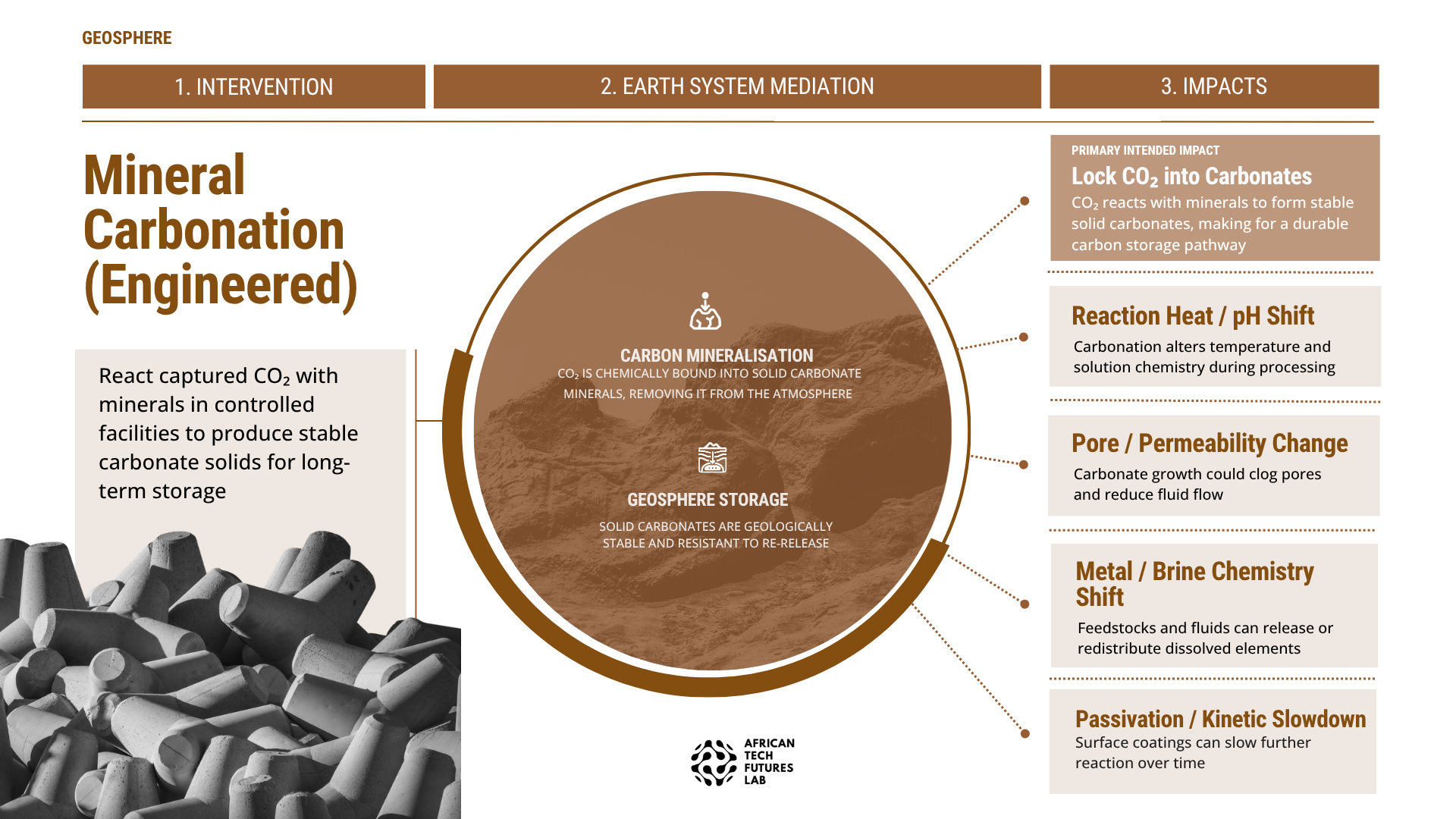
Mineral Carbonation (engineered)
This climate intervention technique works by reacting captured CO₂ with minerals in controlled facilities to produce stable carbonate solids for long-term storage, and it would be mediated by the following key Earth systems: Carbon Mineralisation and Geosphere Storage. A number of impacts and outcomes would be co-produced, including Lock CO₂ into Carbonates, Reaction Heat / pH Shift, Pore / Permeability Change, Metal / Brine Chemistry Shift, and Passivation / Kinetic Slowdown.
-
![]()
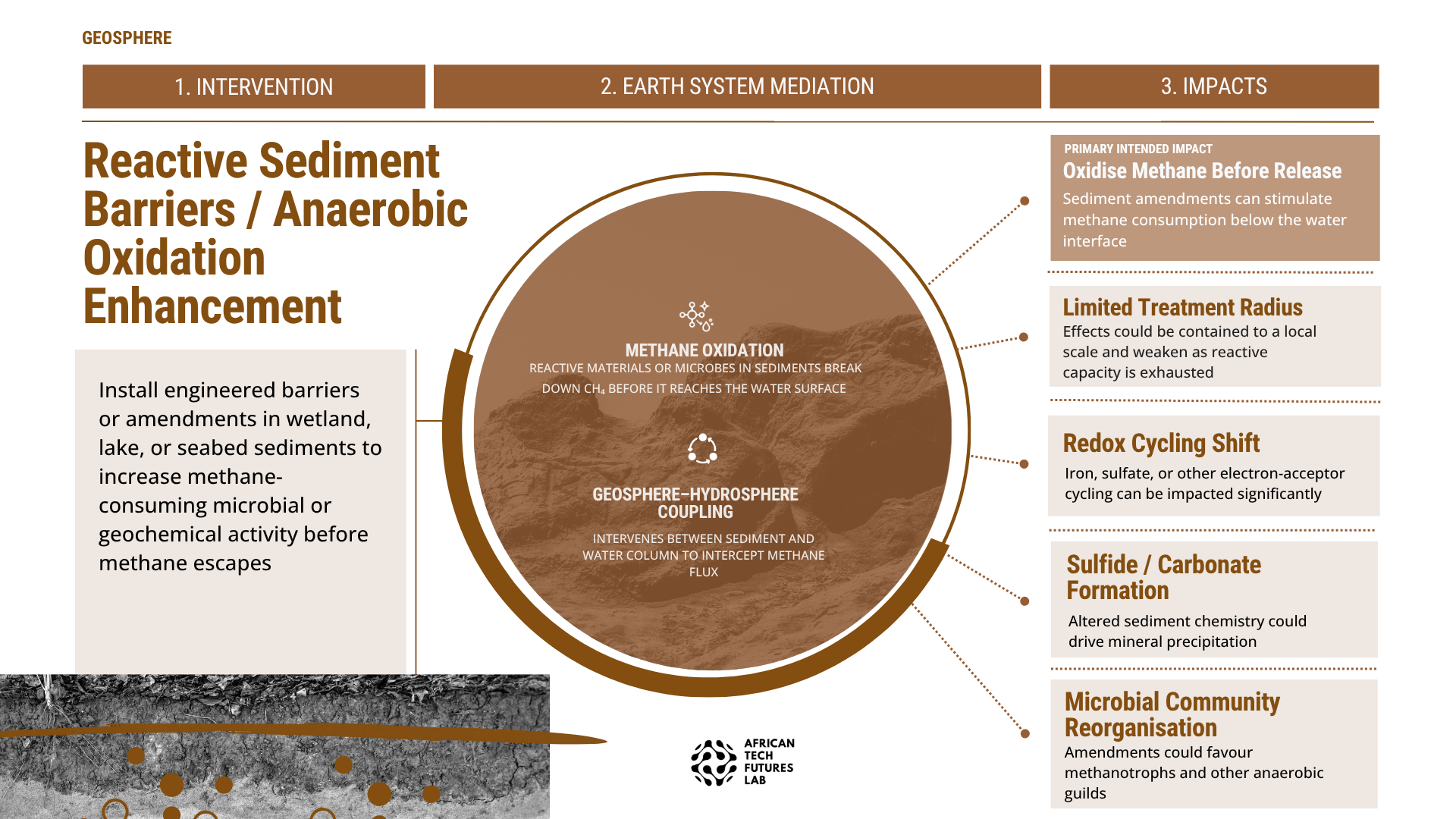
Reactive Sediment Barriers / Anaerobic Oxidation Enhancement
This climate intervention technique works by installing engineered barriers or amendments in wetland, lake, or seabed sediments to increase methane-consuming microbial or geochemical activity before methane escapes, and it would be mediated by the following key Earth systems: Methane Oxidation and Geosphere–Hydrosphere Coupling. A number of impacts and outcomes would be co-produced, including Oxidise Methane Before Release, Limited Treatment Radius, Redox Cycling Shift, Sulfide / Carbonate Formation, and Microbial Community Reorganisation.
Previous
Previous
Biosphere
Next
Next