
-
![]()
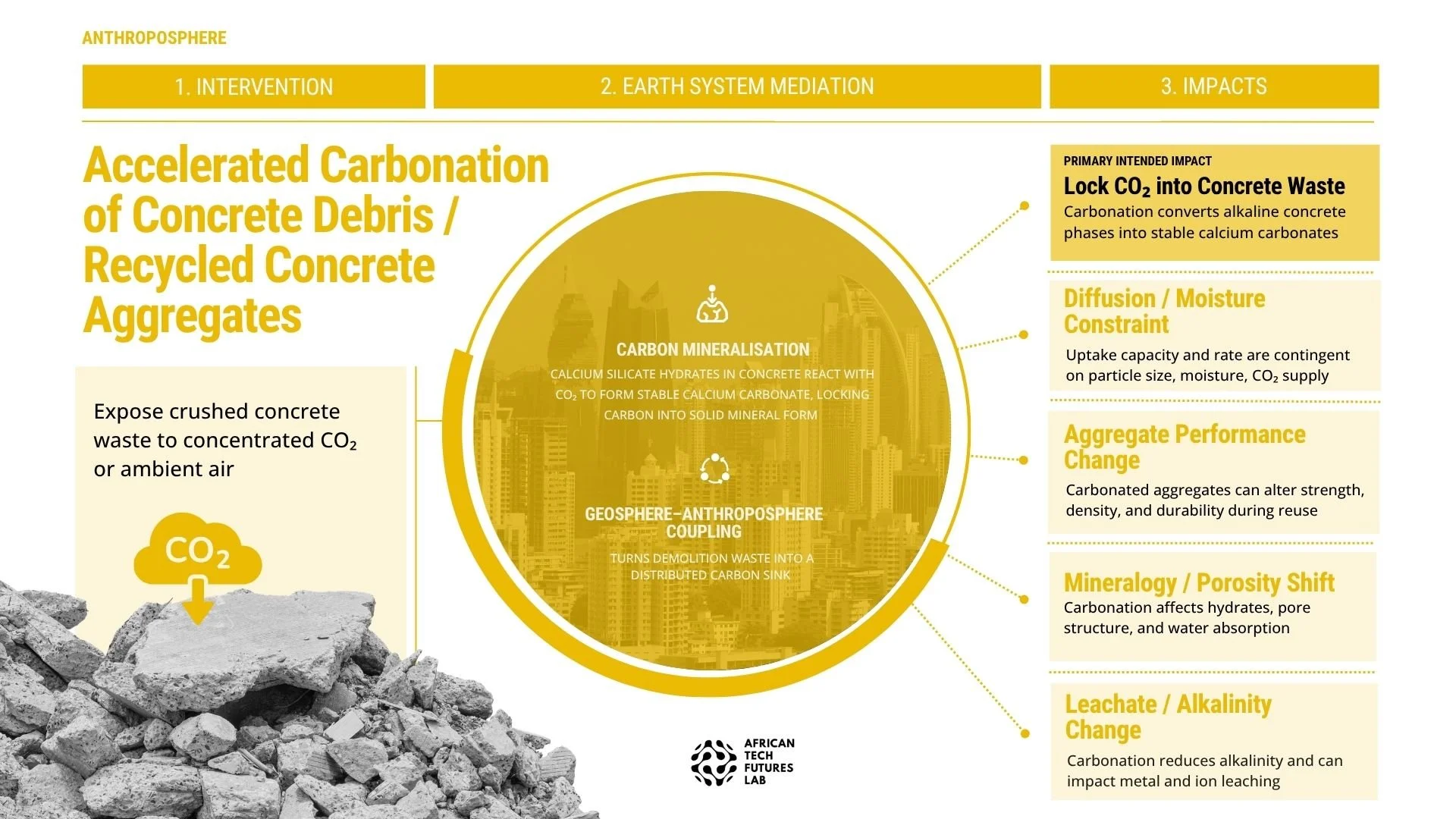
Accelerated Carbonation of Concrete Debris / Recycled Concrete Aggregates
This climate intervention technique works by exposing crushed concrete waste to concentrated CO₂ or ambient air, and it would be mediated by the following key Earth systems: Carbon Mineralisation and Geosphere–Anthroposphere Coupling. A number of impacts and outcomes would be co-produced, including Lock CO₂ into Concrete Waste, Diffusion / Moisture Constraint, Aggregate Performance Change, Mineralogy / Porosity Shift, and Leachate / Alkalinity Change.
-
![]()
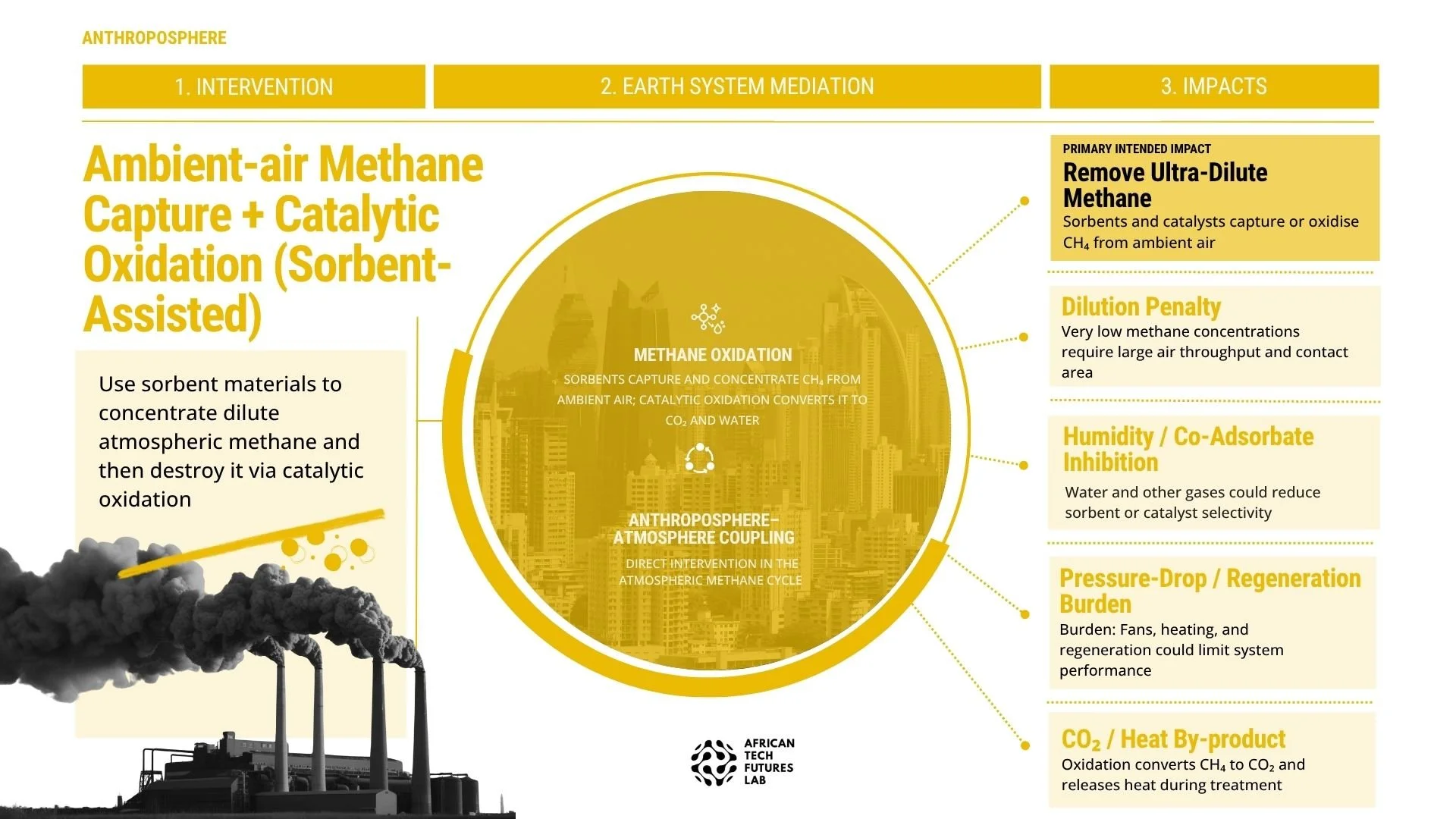
Ambient-air Methane Capture + Catalytic Oxidation (sorbent-assisted)
This climate intervention technique works by using sorbent materials to concentrate dilute atmospheric methane and then destroy it via catalytic oxidation, and it would be mediated by the following key Earth systems: Methane Oxidation and Anthroposphere–Atmosphere Coupling. A number of impacts and outcomes would be co-produced, including Remove Ultra-Dilute Methane, Dilution Penalty, Humidity / Co-Adsorbate Inhibition, Pressure-Drop / Regeneration Burden, and CO₂ / Heat By-product.
-
![]()
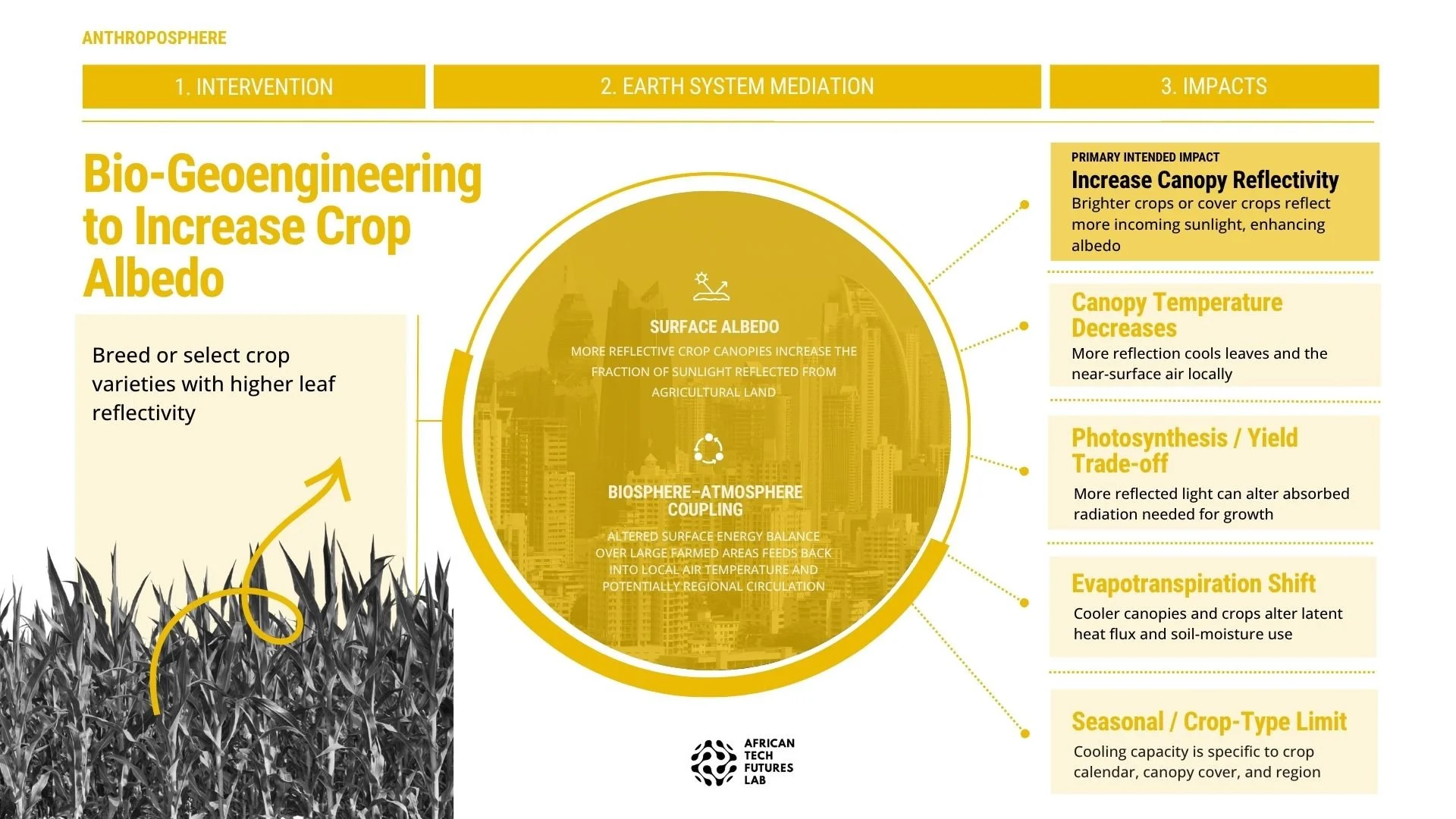
Bio-geoengineering to Increase Crop Albedo
This climate intervention technique works by breeding or select crop varieties with higher leaf reflectivity, and it would be mediated by the following key Earth systems: Surface Albedo and Biosphere–Atmosphere Coupling. A number of impacts and outcomes would be co-produced, including Increase Canopy Reflectivity, Canopy Temperature Decreases, Photosynthesis / Yield Trade-off, Evapotranspiration Shift, and Seasonal / Crop-Type Limit.
-
![]()
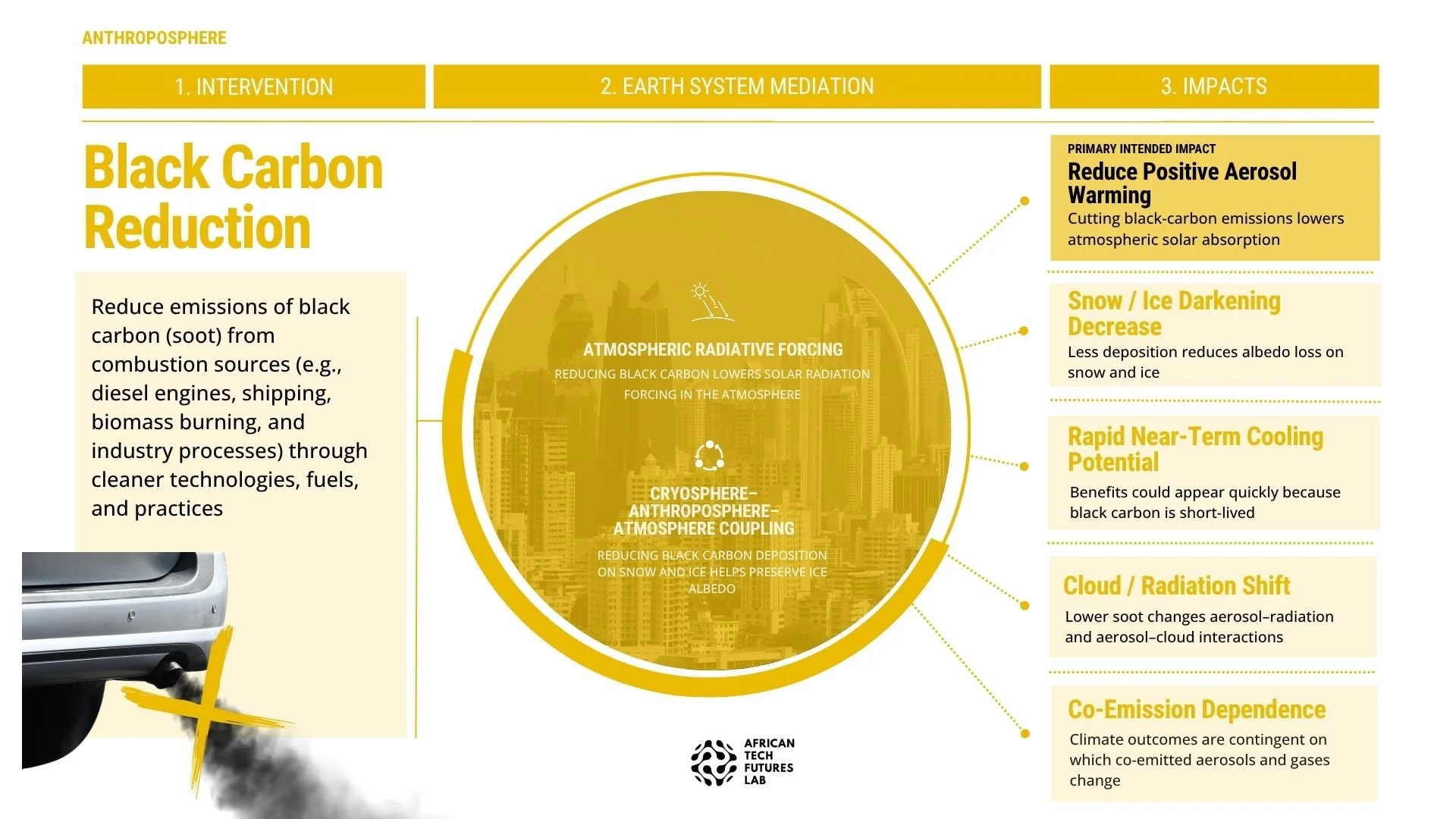
Black Carbon Reduction
This climate intervention technique works by reducing emissions of black carbon (soot) from combustion sources (e.g., diesel engines, shipping, biomass burning, and industry processes) through cleaner technologies, fuels, and practices, and it would be mediated by the following key Earth systems: Atmospheric Radiative Forcing and Cryosphere–Anthroposphere–Atmosphere Coupling. A number of impacts and outcomes would be co-produced, including Reduce Positive Aerosol Warming, Snow / Ice Darkening Decrease, Rapid Near-Term Cooling Potential, Cloud / Radiation Shift, and Co-Emission Dependence.
-
![]()
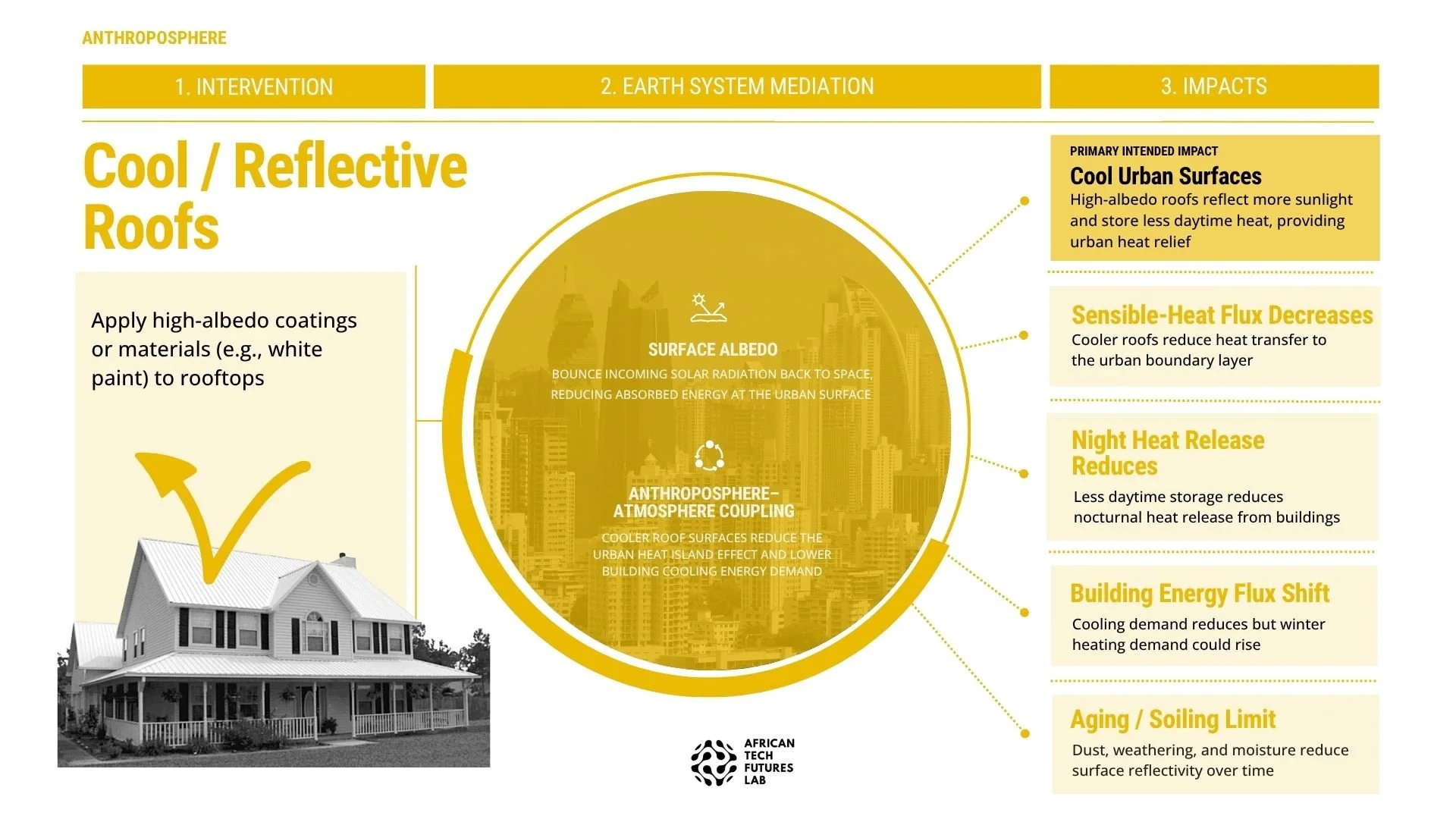
Cool / Reflective Roofs
This climate intervention technique works by applying high-albedo coatings or materials (e.g., white paint) to rooftops, and it would be mediated by the following key Earth systems: Surface Albedo and Anthroposphere–Atmosphere Coupling. A number of impacts and outcomes would be co-produced, including Cool Urban Surfaces, Sensible-Heat Flux Decreases, Night Heat Release Reduces, Building Energy Flux Shift, and Aging / Soiling Limit.
-
![]()
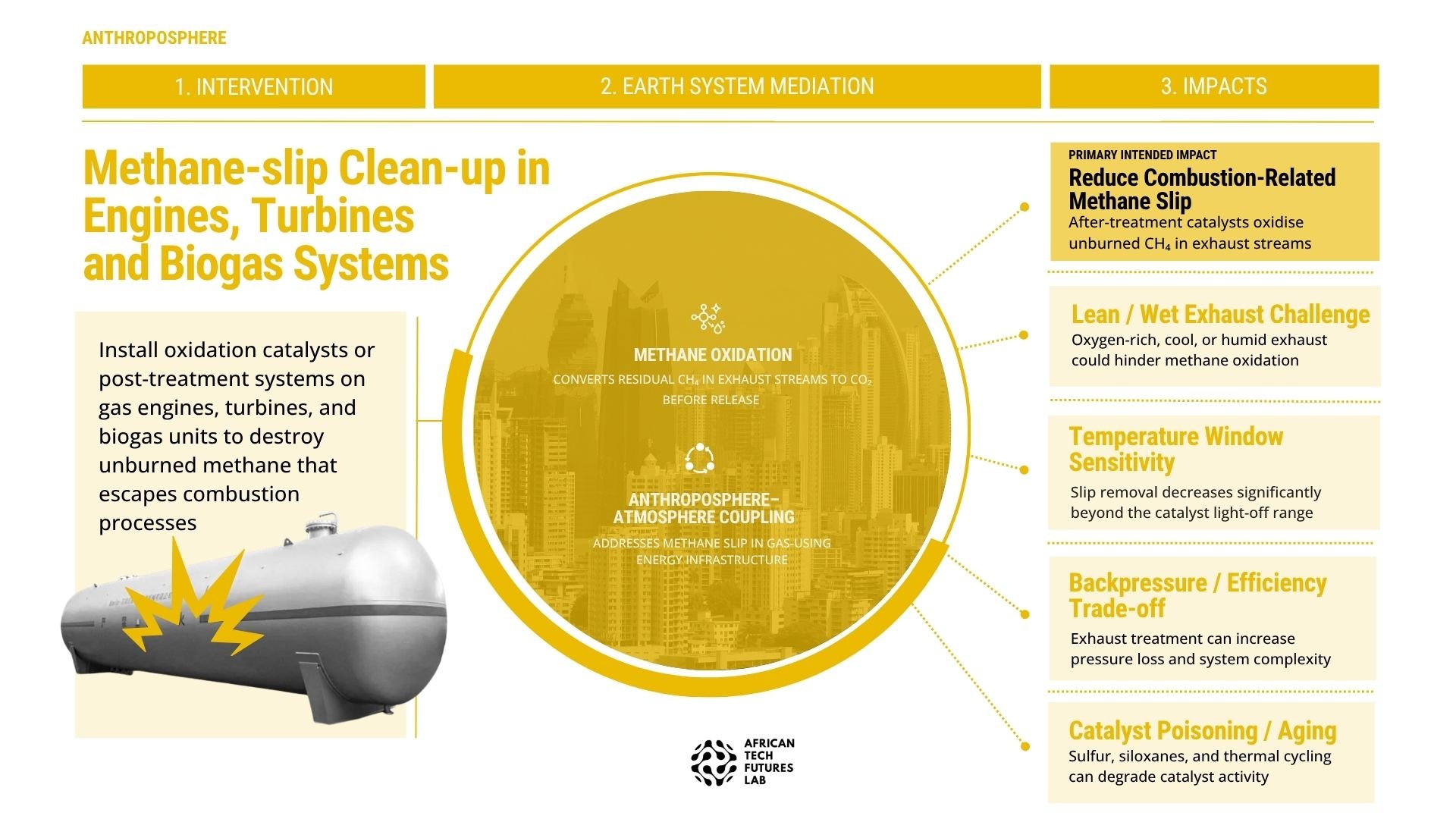
Methane-slip Clean-up in Engines, Turbines and Biogas Systems
This climate intervention technique works by installing oxidation catalysts or post-treatment systems on gas engines, turbines, and biogas units to destroy unburned methane that escapes combustion processes, and it would be mediated by the following key Earth systems: Methane Oxidation and Anthroposphere–Atmosphere Coupling. A number of impacts and outcomes would be co-produced, including Reduce Combustion-Related Methane Slip, Lean / Wet Exhaust Challenge, Temperature Window Sensitivity, Backpressure / Efficiency Trade-off, and Catalyst Poisoning / Aging.
-
![]()
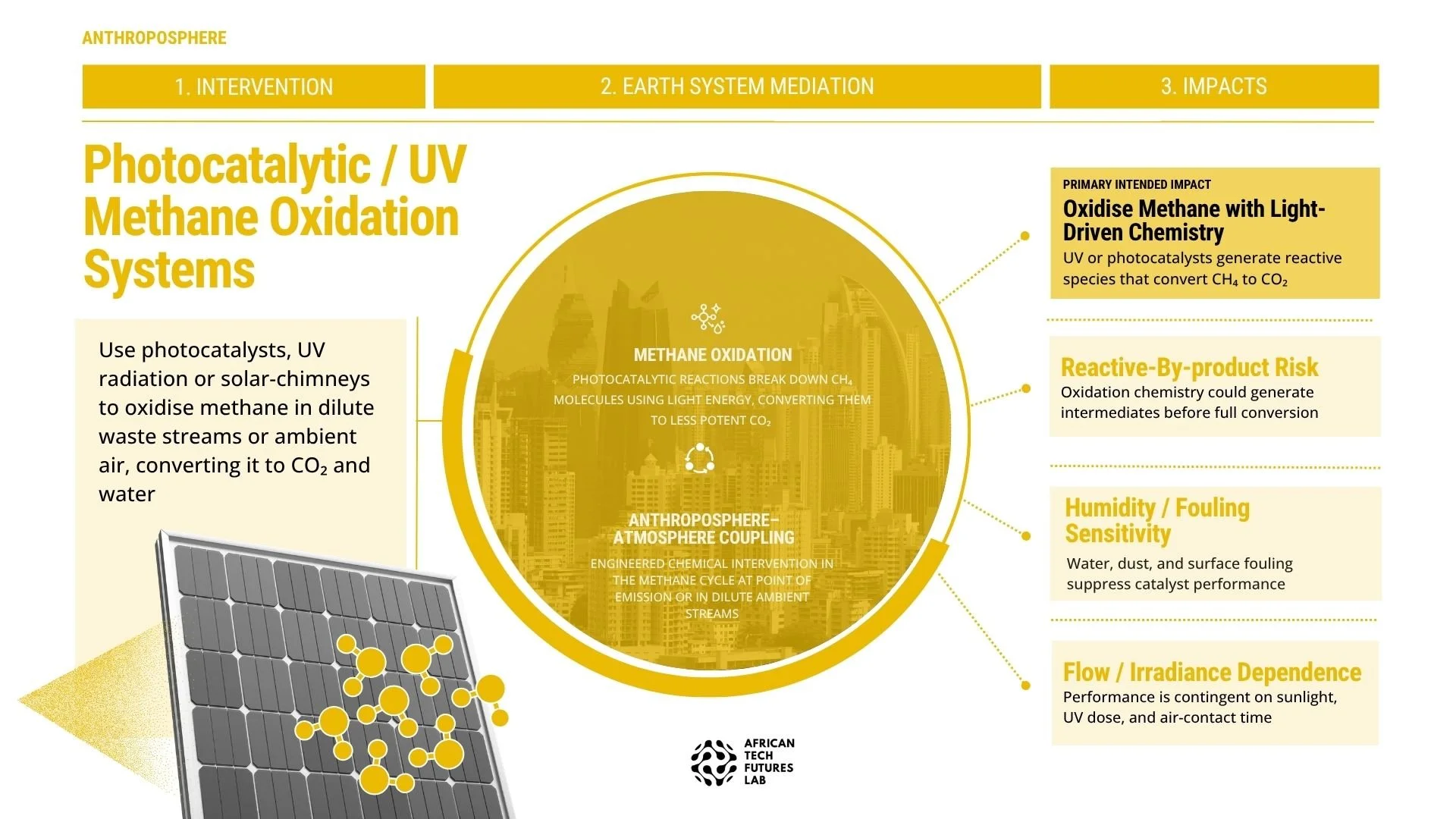
Photocatalytic / UV Methane Oxidation Systems
This climate intervention technique works by using photocatalysts, UV radiation or solar-chimneys to oxidise methane in dilute waste streams or ambient air, converting it to CO₂ and water, and it would be mediated by the following key Earth systems: Methane Oxidation and Anthroposphere–Atmosphere Coupling. A number of impacts and outcomes would be co-produced, including Oxidise Methane with Light-Driven Chemistry, Reactive-By-product Risk, Humidity / Fouling Sensitivity, and Flow / Irradiance Dependence.
-
![]()
Point-source Methane Oxidisers for Oil & Gas, Waste and Agriculture
This climate intervention technique works by deploying combustion or catalytic oxidation units at high-emitting sources (e.g., flares, landfills, wastewater facilities, livestock operations) to destroy methane before atmospheric release, and it would be mediated by the following key Earth systems: Methane Oxidation and Anthroposphere–Atmosphere Coupling. A number of impacts and outcomes would be co-produced, including Oxidise Methane at Concentrated Sources, CO₂ / Heat Production, Temperature / Concentration Window, Source-Composition Sensitivity, and Maintenance / Bypass Risk.
-
![]()
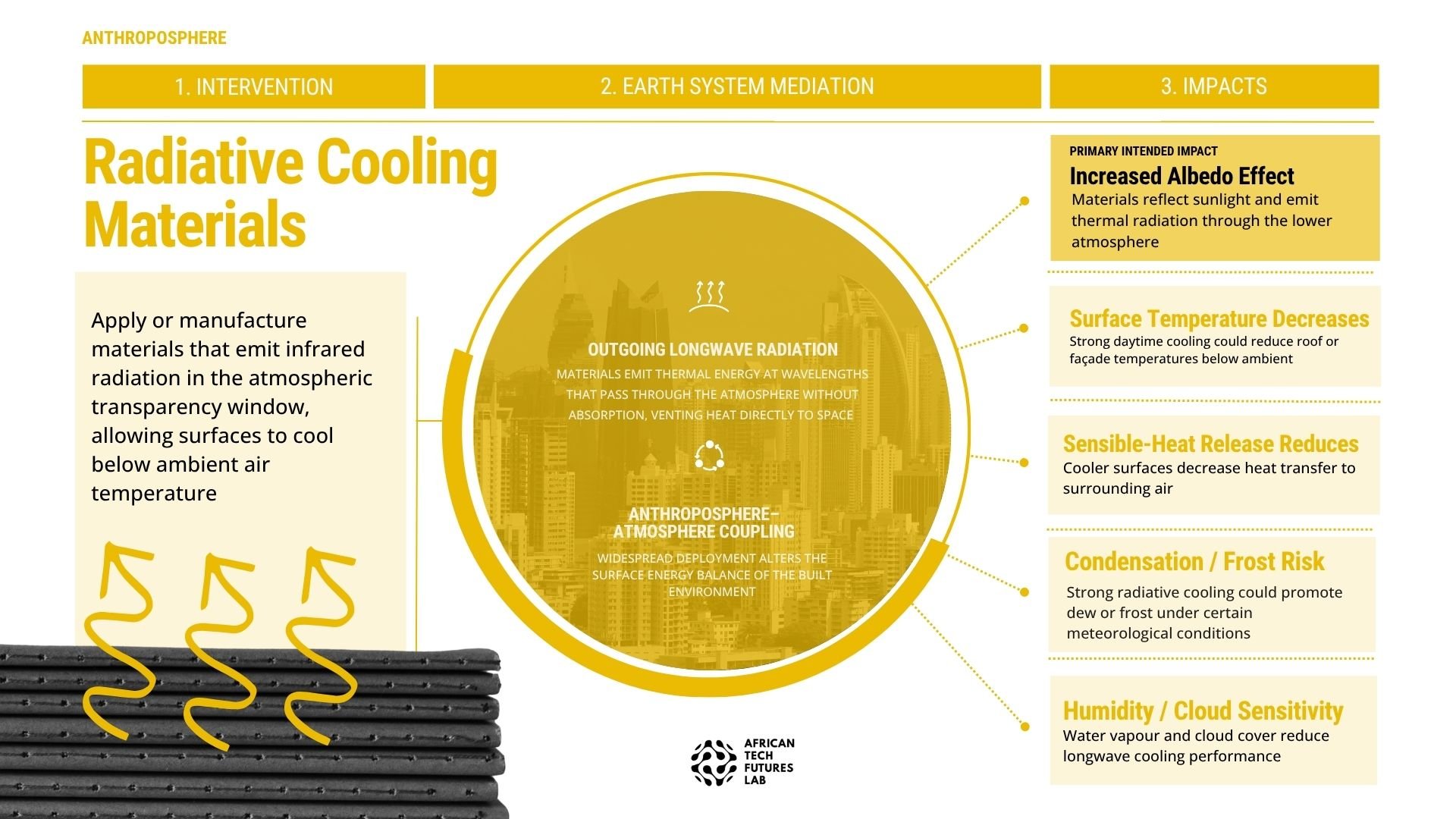
Radiative Cooling Materials
This climate intervention technique works by applying or manufacturing materials that emit infrared radiation in the atmospheric transparency window, allowing surfaces to cool below ambient air temperature, and it would be mediated by the following key Earth systems: Outgoing Longwave Radiation and Anthroposphere–Atmosphere Coupling. A number of impacts and outcomes would be co-produced, including Increased Albedo Effect, Surface Temperature Decreases, Sensible-Heat Release Reduces, Condensation / Frost Risk, and Humidity / Cloud Sensitivity.
-
![]()
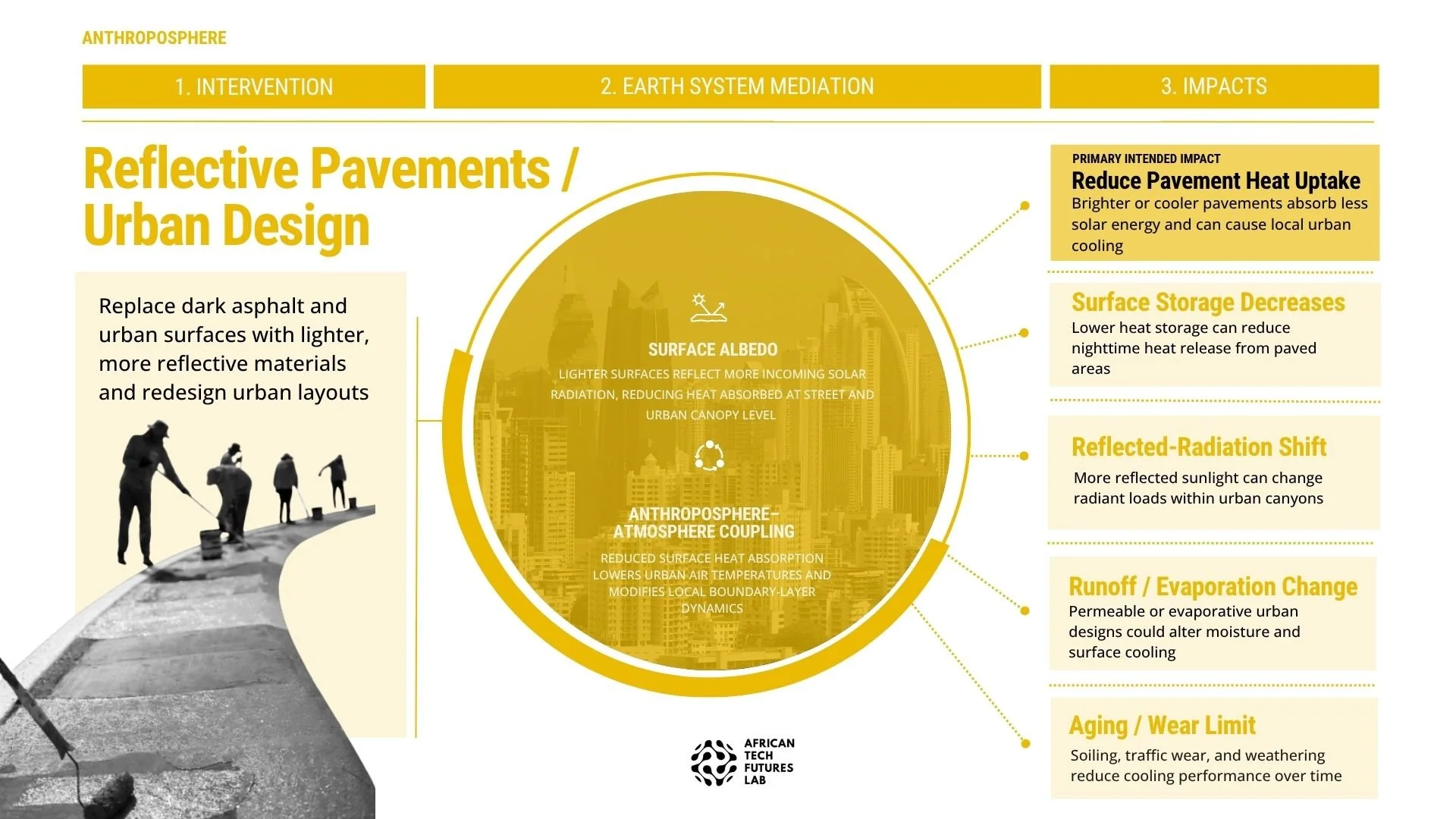
Reflective Pavements / Urban Design
This climate intervention technique works by replacing dark asphalt and urban surfaces with lighter, more reflective materials and redesigning urban layouts, and it would be mediated by the following key Earth systems: Surface Albedo and Anthroposphere–Atmosphere Coupling. A number of impacts and outcomes would be co-produced, including Reduce Pavement Heat Uptake, Surface Storage Decreases, Reflected-Radiation Shift, Runoff / Evaporation Change, and Aging / Wear Limit.
-
![]()
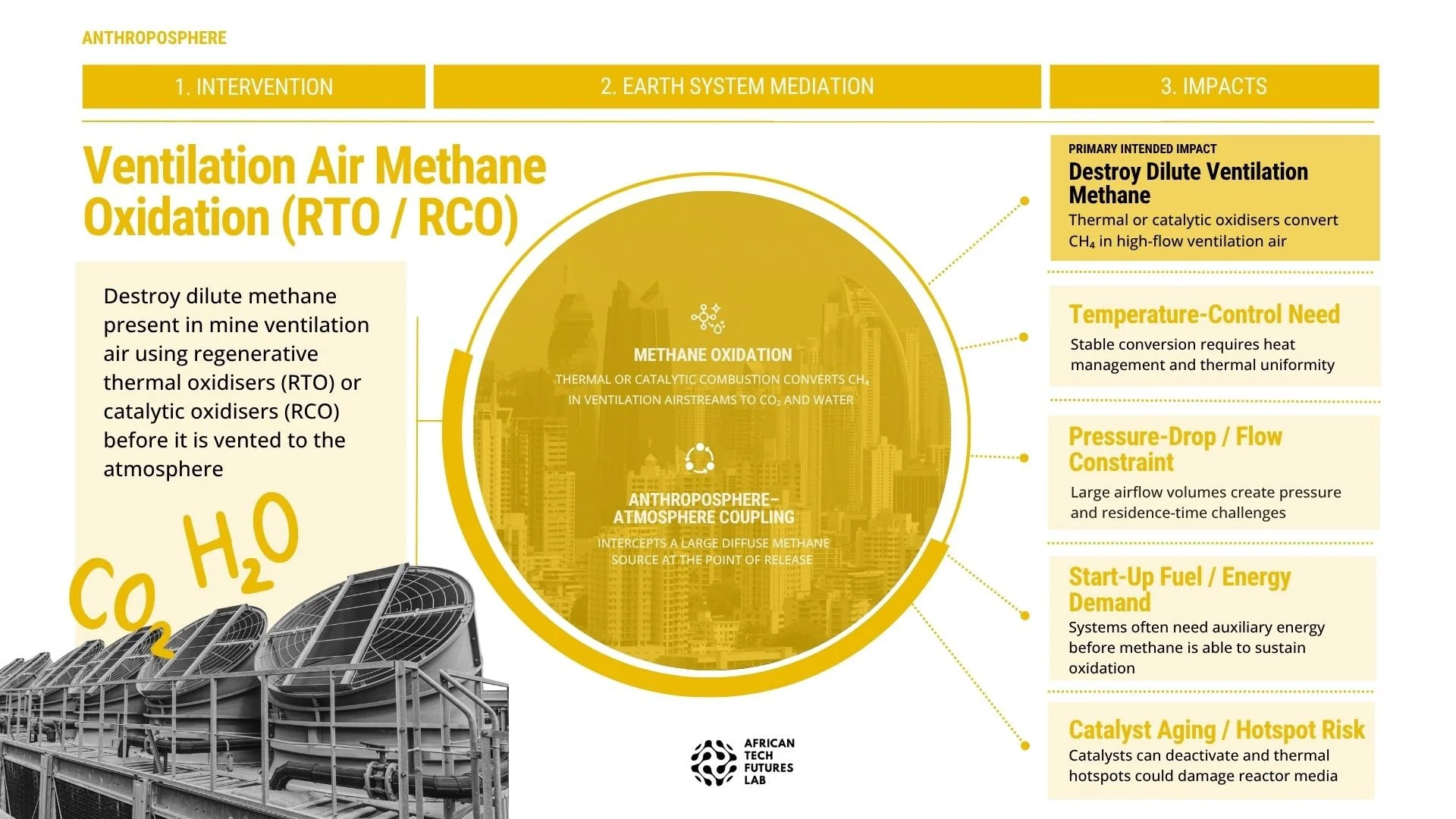
Ventilation Air Methane Oxidation (RTO / RCO)
This climate intervention technique works by destroying dilute methane present in mine ventilation air using regenerative thermal oxidisers (RTO) or catalytic oxidisers (RCO) before it is vented to the atmosphere, and it would be mediated by the following key Earth systems: Methane Oxidation and Anthroposphere–Atmosphere Coupling. A number of impacts and outcomes would be co-produced, including Destroy Dilute Ventilation Methane, Temperature-Control Need, Pressure-Drop / Flow Constraint, Start-Up Fuel / Energy Demand, and Catalyst Aging / Hotspot Risk.
-
![]()
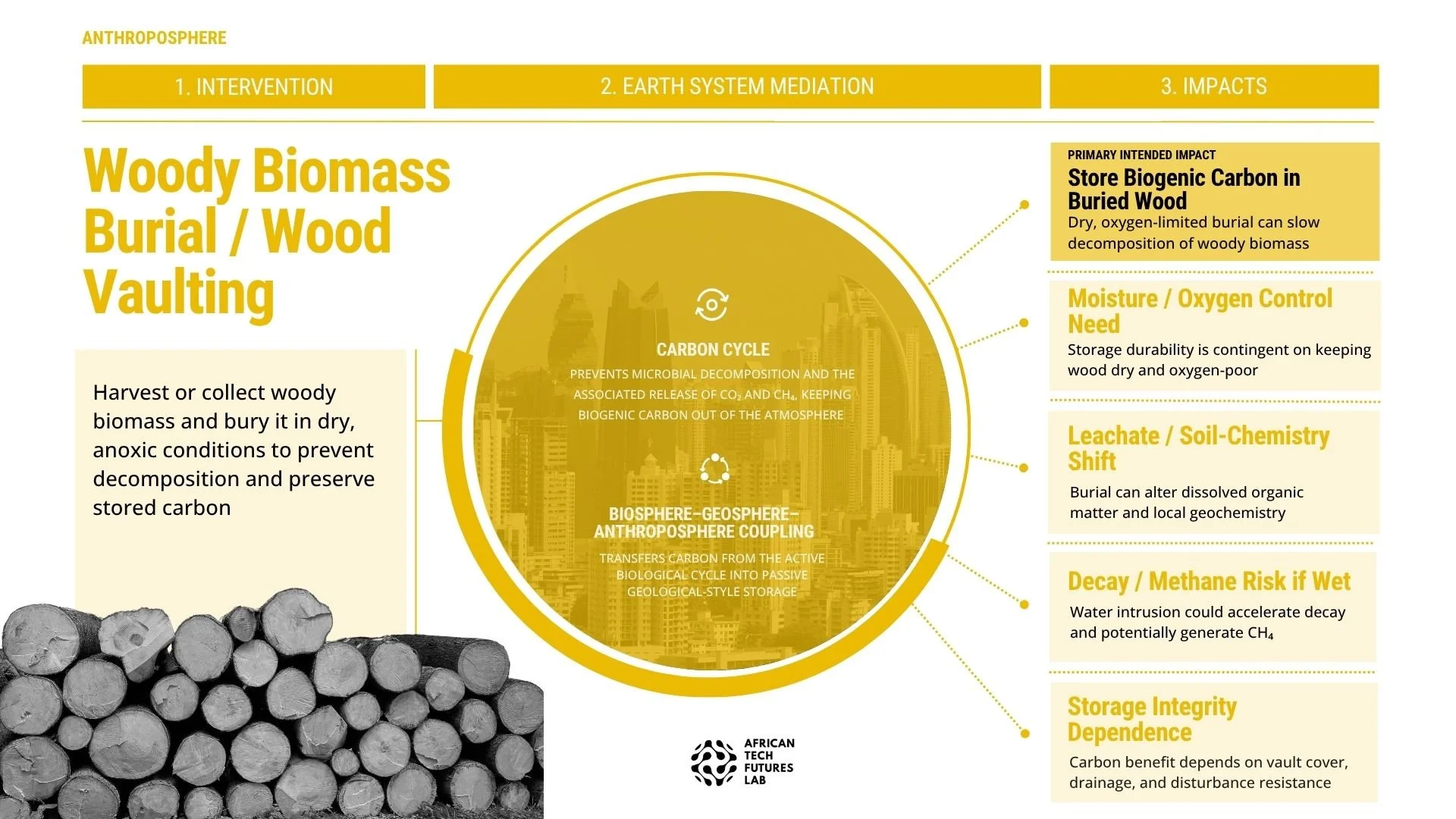
Woody Biomass Burial / Wood Vaulting
This climate intervention technique works by harvesting or collecting woody biomass and burying it in dry, anoxic conditions to prevent decomposition and preserve stored carbon, and it would be mediated by the following key Earth systems: Carbon Cycle and Biosphere–Geosphere–Anthroposphere Coupling. A number of impacts and outcomes would be co-produced, including Store Biogenic Carbon in Buried Wood, Moisture / Oxygen Control Need, Leachate / Soil-Chemistry Shift, Decay / Methane Risk if Wet, and Storage Integrity Dependence.

Previous
Previous
Geosphere
Next
Next