
-
![]()
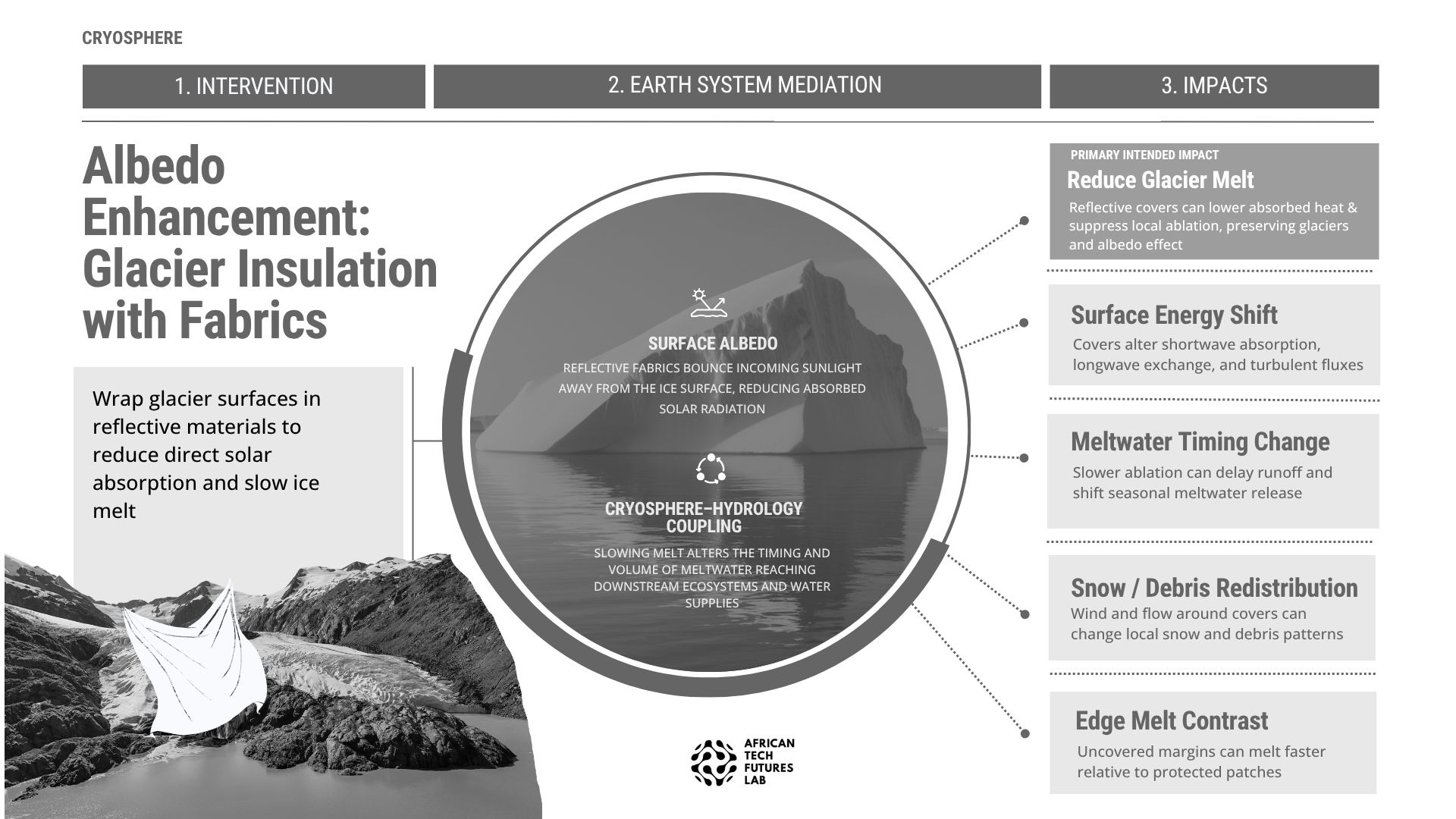
Albedo enhancement / Glacier Insulation with Fabrics
This climate intervention technique works by wrapping glacier surfaces in reflective materials to reduce direct solar absorption and slow ice melt, and it would be mediated by the following key Earth systems: Surface Albedo and Cryosphere–Hydrology Coupling. A number of impacts and outcomes would be co-produced, including Reduce Glacier Melt, Surface Energy Shift, Meltwater Timing Change, Snow / Debris Redistribution, and Edge Melt Contrast.
-
![]()
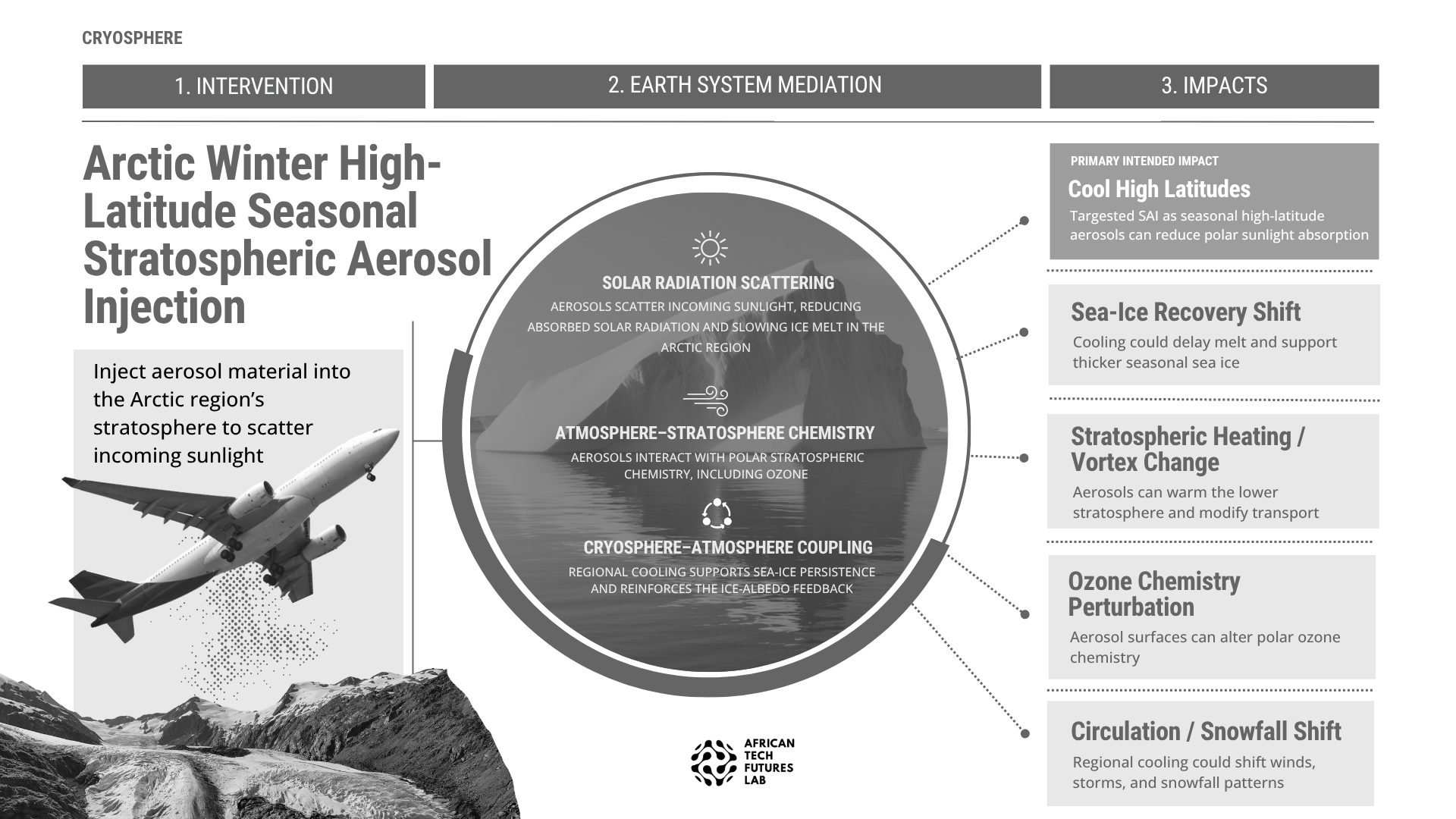
Arctic Winter High-latitude Seasonal Stratospheric Aerosol Injection
This climate intervention technique works by injecting aerosol material into the Arctic region’s stratosphere to scatter incoming sunlight, and it would be mediated by the following key Earth systems: Solar Radiation Scattering, Atmosphere–Stratosphere Chemistry, and Cryosphere–Atmosphere Coupling. A number of impacts and outcomes would be co-produced, including Cool High Latitudes, Sea-Ice Recovery Shift, Stratospheric Heating / Vortex Change, Ozone Chemistry Perturbation, and Circulation / Snowfall Shift.
-
![]()
Artificial Glaciers / Ice Stupas / Artificial Ice Reservoirs
This climate intervention technique works by building structures that freeze and store winter water as artificial ice bodies for delayed meltwater release in spring and summer, and it would be mediated by the following key Earth systems: Hydrological Cycle and Cryosphere–Hydrosphere Coupling. A number of impacts and outcomes would be co-produced, including Store Winter Water as Ice, Seasonal Runoff Shift, Meteorological Sensitivity, Local Humidity / Drainage Change, and Sublimation / Melt Losses.
-
![]()
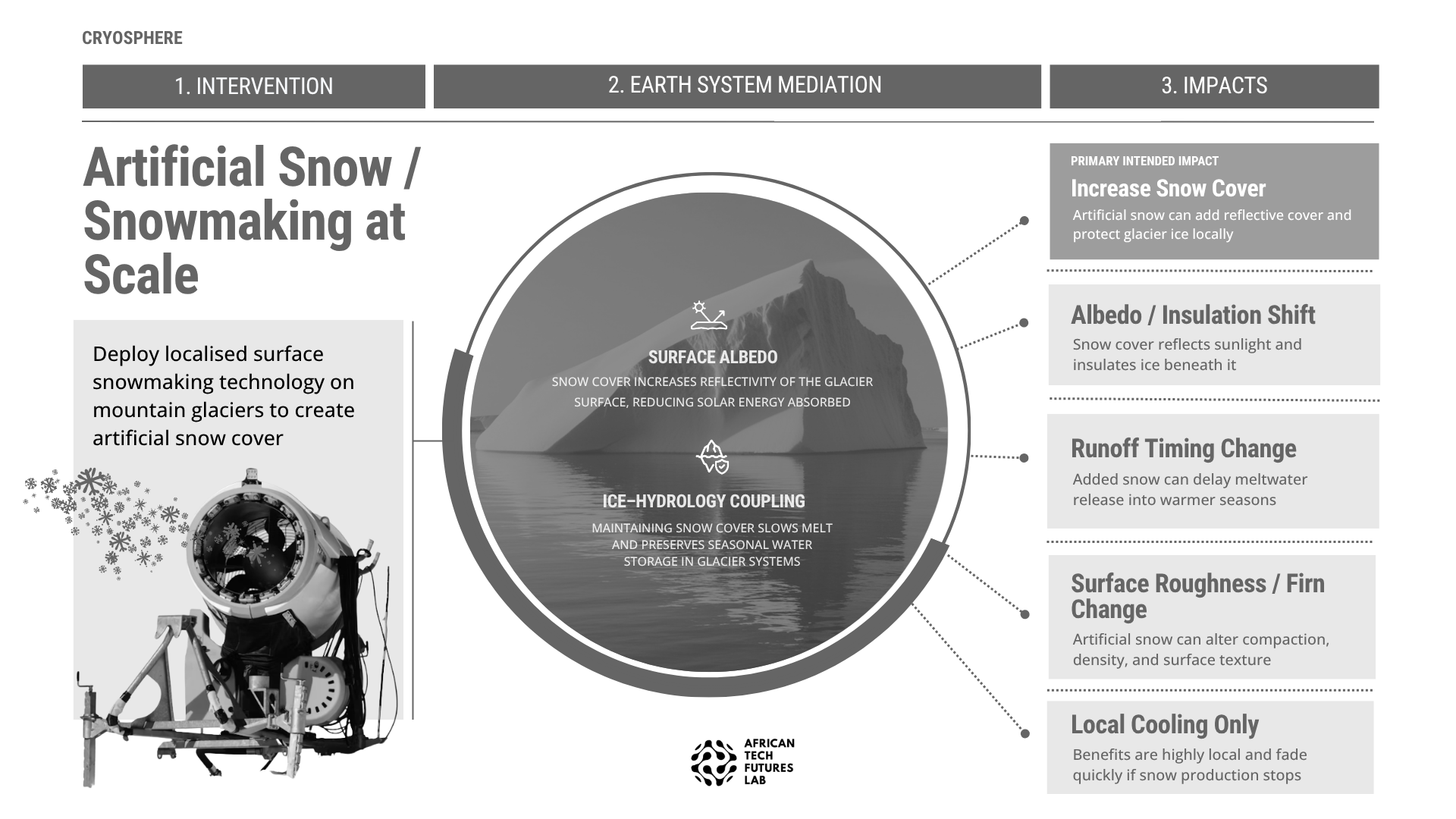
Artificial Snow / Snowmaking at Scale
This climate intervention technique works by deploying localised surface snowmaking technology on mountain glaciers to create artificial snow cover, and it would be mediated by the following key Earth systems: Surface Albedo and Ice–Hydrology Coupling. A number of impacts and outcomes would be co-produced, including Increase Snow Cover, Albedo / Insulation Shift, Runoff Timing Change, Surface Roughness / Firn Change, and Local Cooling Only.
-
![]()
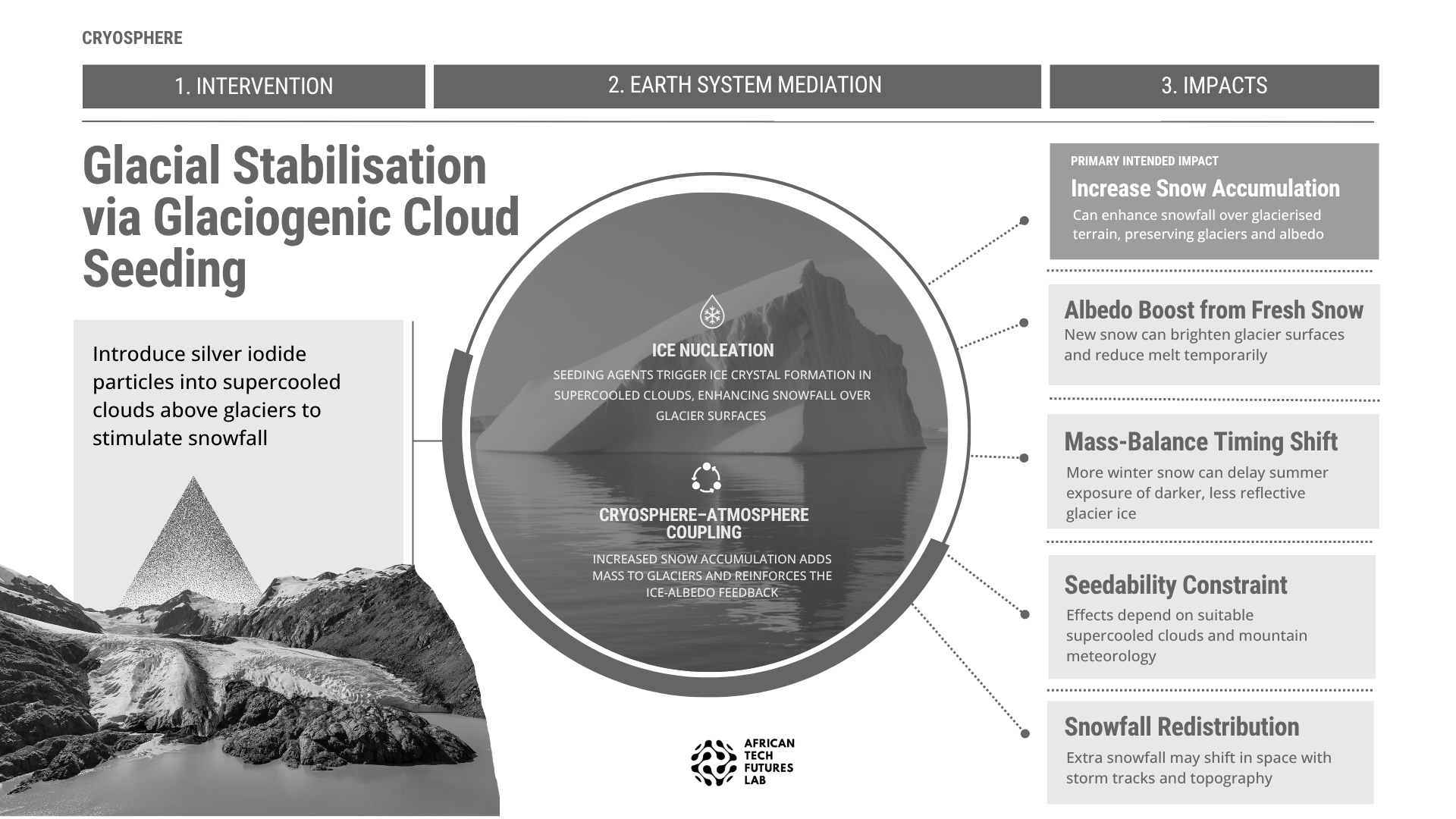
Glacial Stabilisation via Glaciogenic Cloud Seeding
This climate intervention technique works by introducing silver iodide particles into supercooled clouds above glaciers to stimulate snowfall, and it would be mediated by the following key Earth systems: Ice Nucleation and Cryosphere–Atmosphere Coupling. A number of impacts and outcomes would be co-produced, including Increase Snow Accumulation, Albedo Boost from Fresh Snow, Mass-Balance Timing Shift, Seedability Constraint, and Snowfall Redistribution.
-
![]()
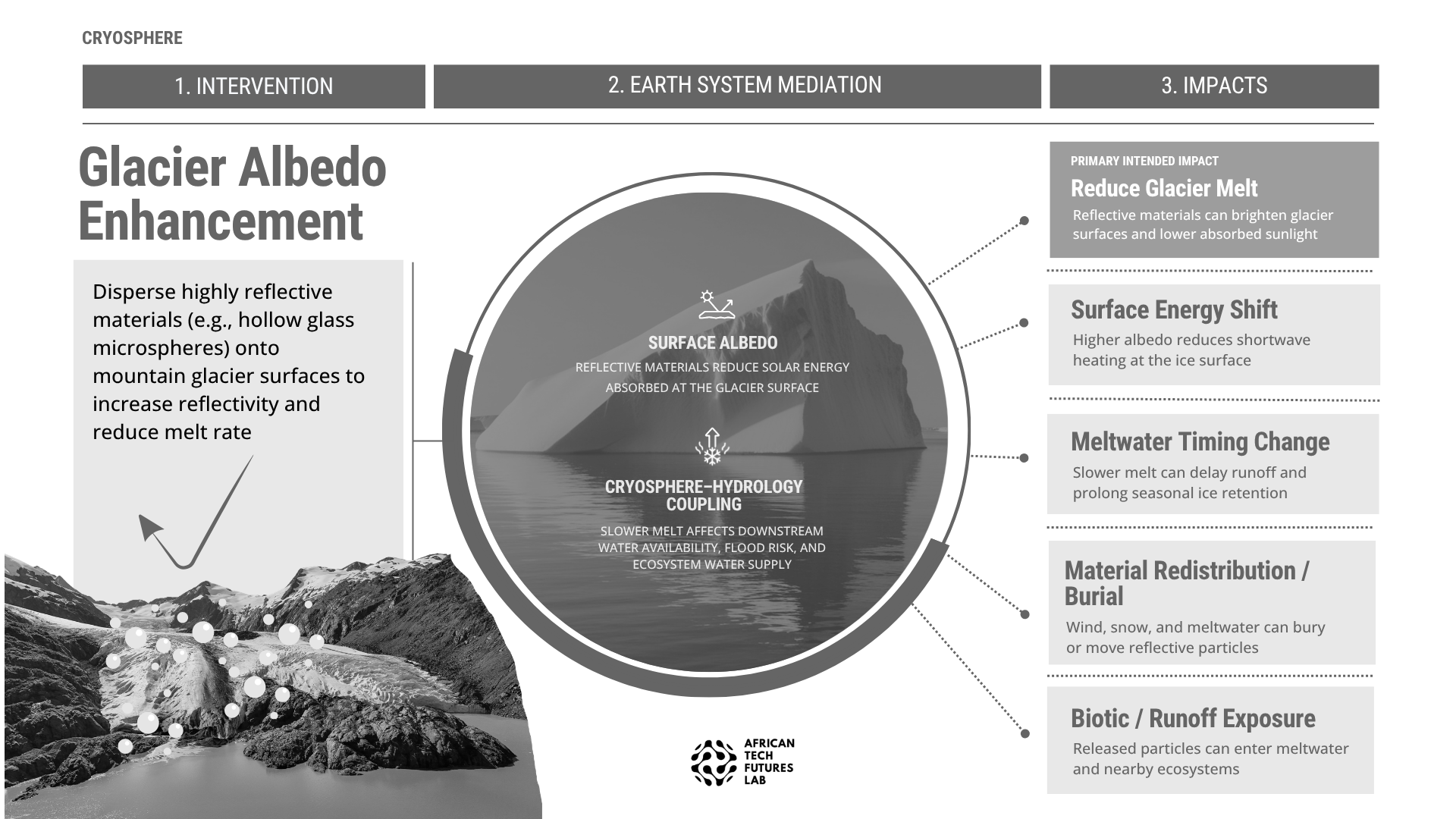
Glacier albedo enhancement
This climate intervention technique works by dispersing highly reflective materials (e.g., hollow glass microspheres) onto mountain glacier surfaces to increase reflectivity and reduce melt rate, and it would be mediated by the following key Earth systems: Surface Albedo and Cryosphere–Hydrology Coupling. A number of impacts and outcomes would be co-produced, including Reduce Glacier Melt, Surface Energy Shift, Meltwater Timing Change, Material Redistribution / Burial, and Biotic / Runoff Exposure.
-
![]()
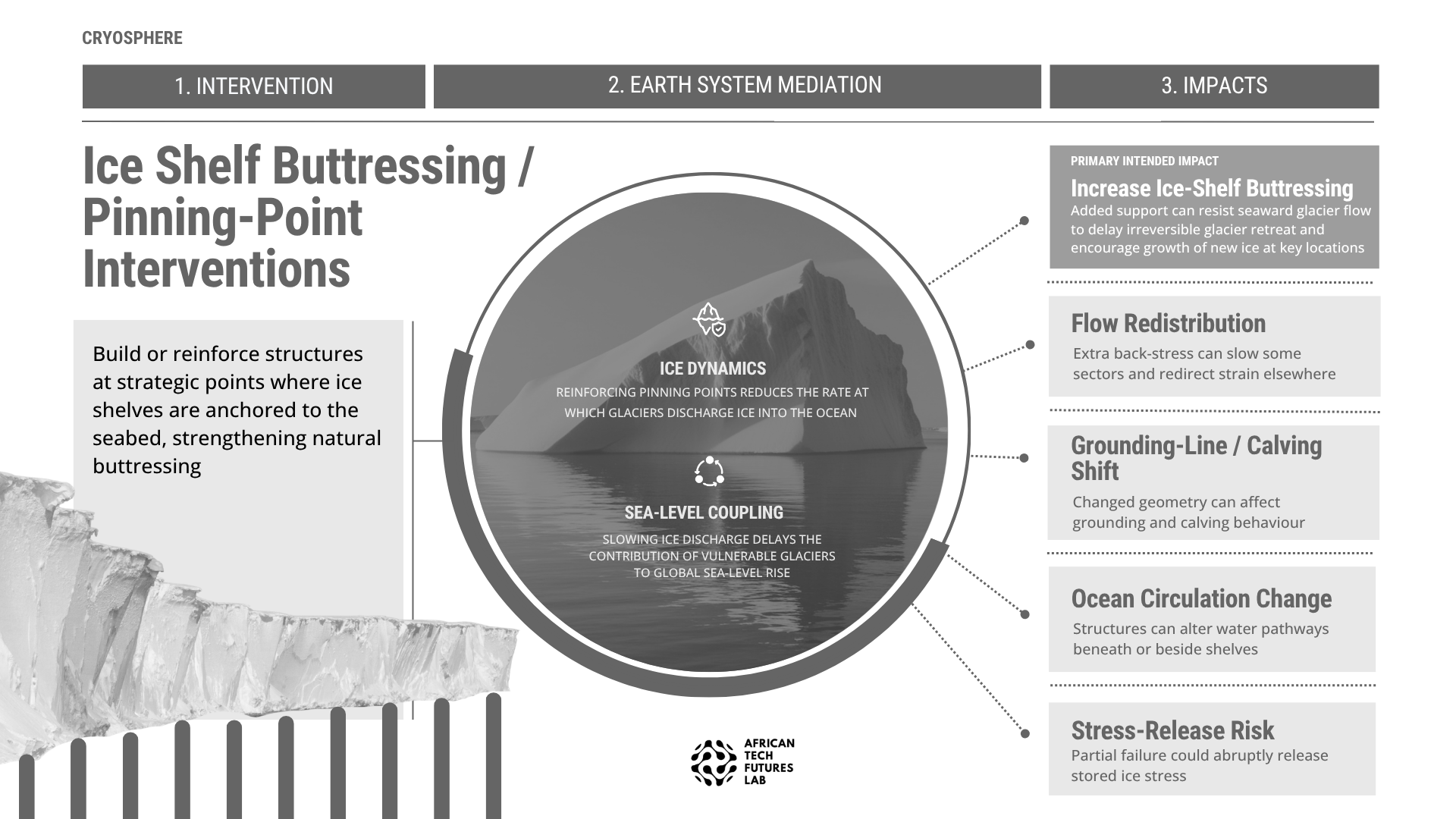
Ice Shelf Buttressing / Pinning-point Interventions
This climate intervention technique works by building or reinforcing structures at strategic points where ice shelves are anchored to the seabed, strengthening natural buttressing, and it would be mediated by the following key Earth systems: Ice Dynamics and Sea-Level Coupling. A number of impacts and outcomes would be co-produced, including Increase Ice-Shelf Buttressing, Flow Redistribution, Grounding-Line / Calving Shift, Ocean Circulation Change, and Stress-Release Risk.
-
![]()
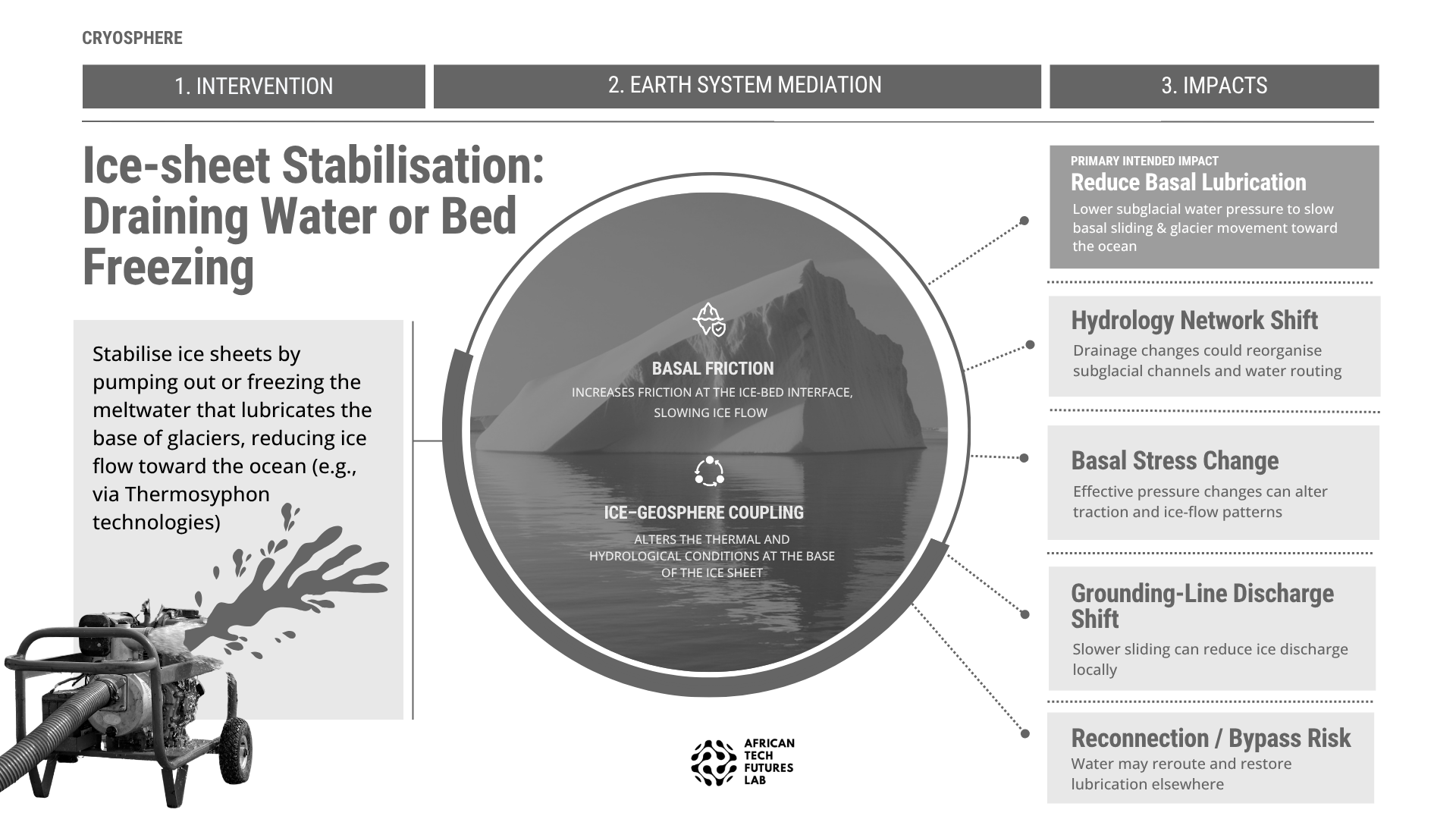
Ice-sheet Stabilisation / Draining Water or Bed Freezing
This climate intervention technique works by stabilising ice sheets by pumping out or freezing the meltwater that lubricates the base of glaciers, reducing ice flow toward the ocean (e.g., via Thermosyphon technologies), and it would be mediated by the following key Earth systems: Basal Friction and Ice–Geosphere Coupling. A number of impacts and outcomes would be co-produced, including Reduce Basal Lubrication, Hydrology Network Shift, Basal Stress Change, Grounding-Line Discharge Shift, and Reconnection / Bypass Risk.
-
![]()
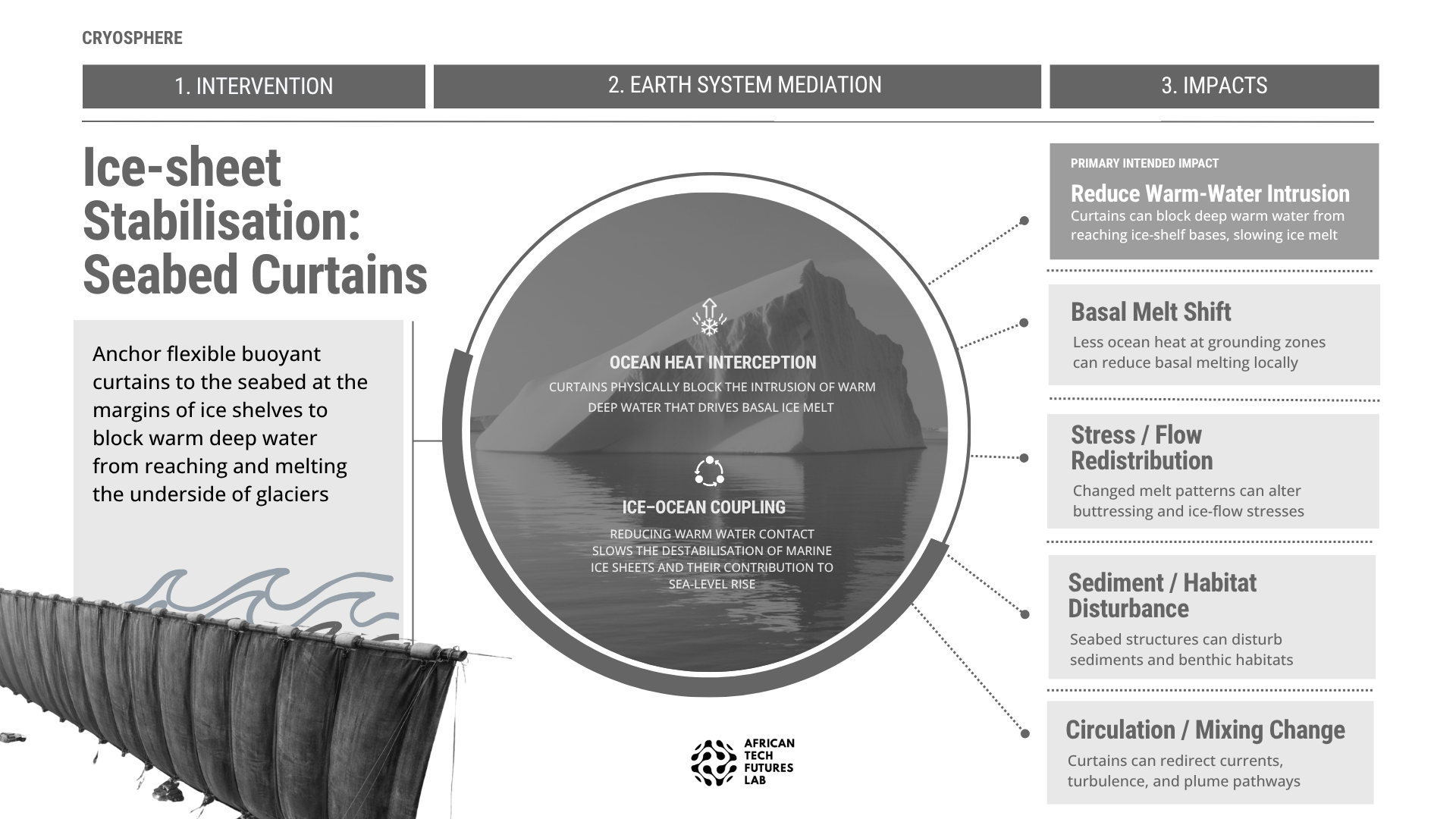
Ice-sheet Stabilisation / Seabed Curtains
This climate intervention technique works by anchoring flexible buoyant curtains to the seabed at the margins of ice shelves to block warm deep water from reaching and melting the underside of glaciers, and it would be mediated by the following key Earth systems: Ocean Heat Interception and Ice–Ocean Coupling. A number of impacts and outcomes would be co-produced, including Reduce Warm-Water Intrusion, Basal Melt Shift, Stress / Flow Redistribution, Sediment / Habitat Disturbance, and Circulation / Mixing Change.
-
![]()
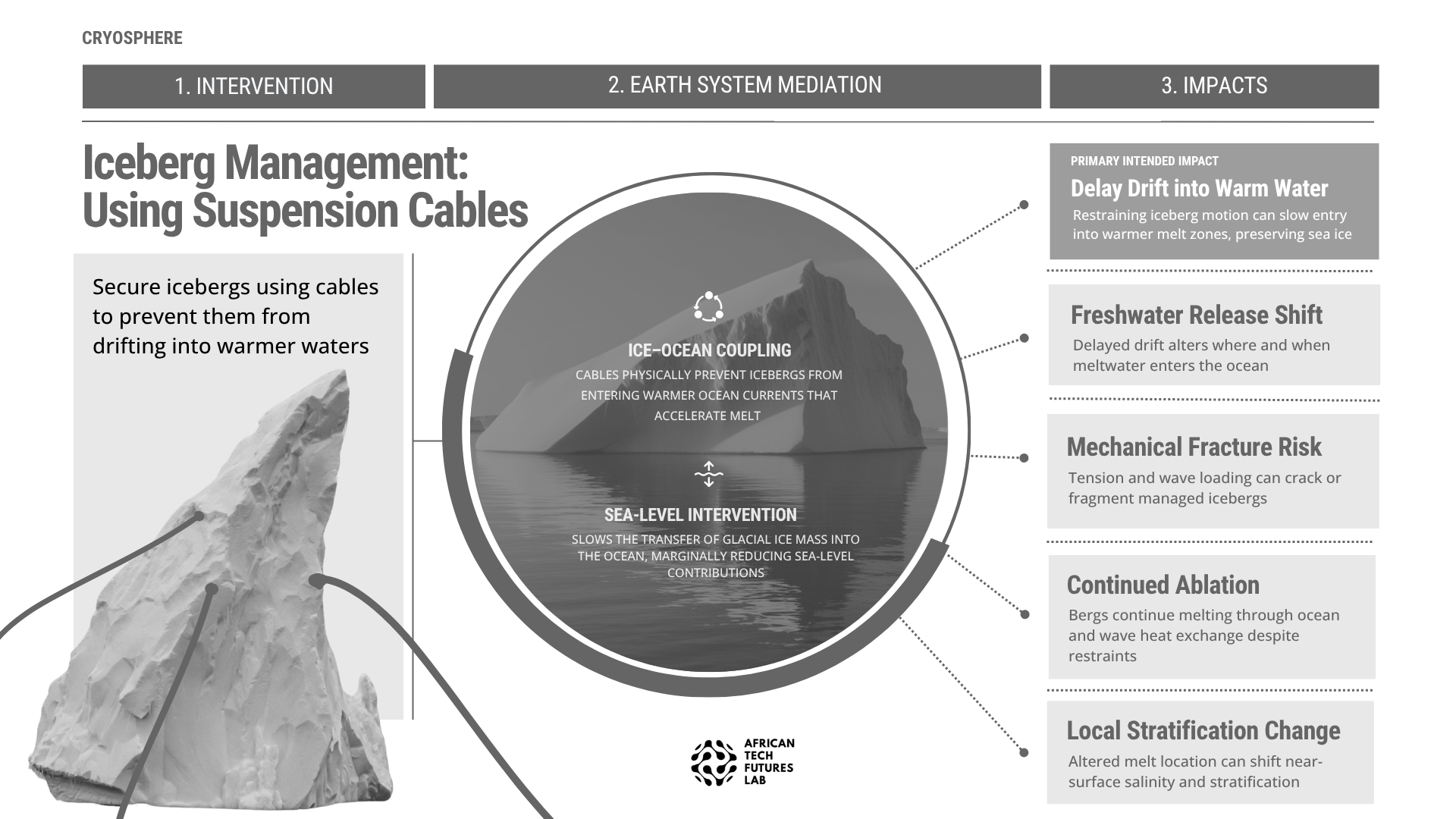
Iceberg Management / Using Suspension Cables
This climate intervention technique works by securing icebergs using cables to prevent them from drifting into warmer waters, and it would be mediated by the following key Earth systems: Ice–Ocean Coupling and Sea-Level Intervention. A number of impacts and outcomes would be co-produced, including Delay Drift into Warm Water, Freshwater Release Shift, Mechanical Fracture Risk, Continued Ablation, and Local Stratification Change.
-
![]()
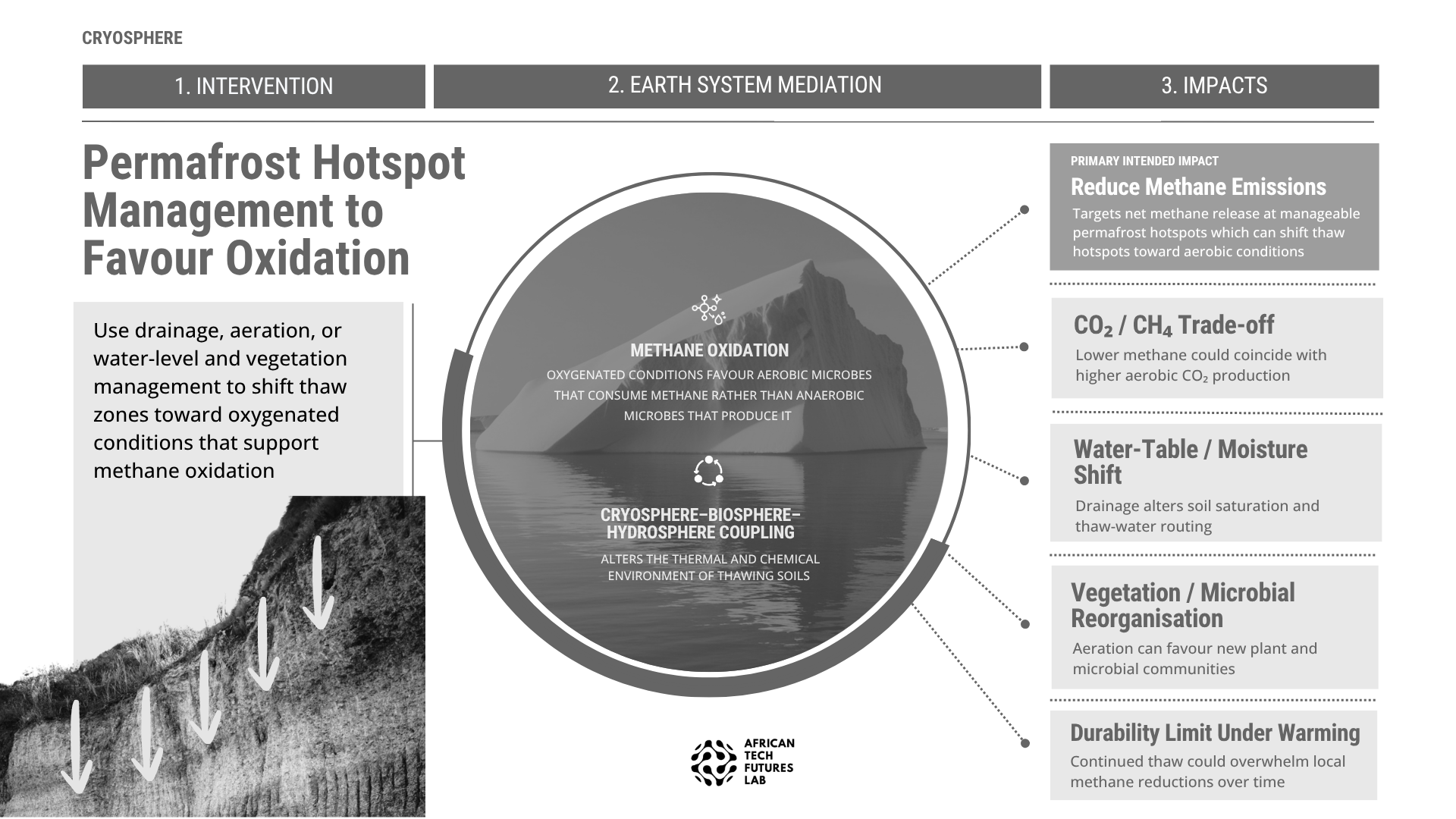
Permafrost Hotspot Management to Favour Oxidation
This climate intervention technique works by using drainage, aeration, or water-level and vegetation management to shift thaw zones toward oxygenated conditions that support methane oxidation, and it would be mediated by the following key Earth systems: Methane Oxidation and Cryosphere–Biosphere–Hydrosphere Coupling. A number of impacts and outcomes would be co-produced, including Reduce Methane Emissions, CO₂ / CH₄ Trade-off, Water-Table / Moisture Shift, Vegetation / Microbial Reorganisation, and Durability Limit Under Warming.
-
![]()
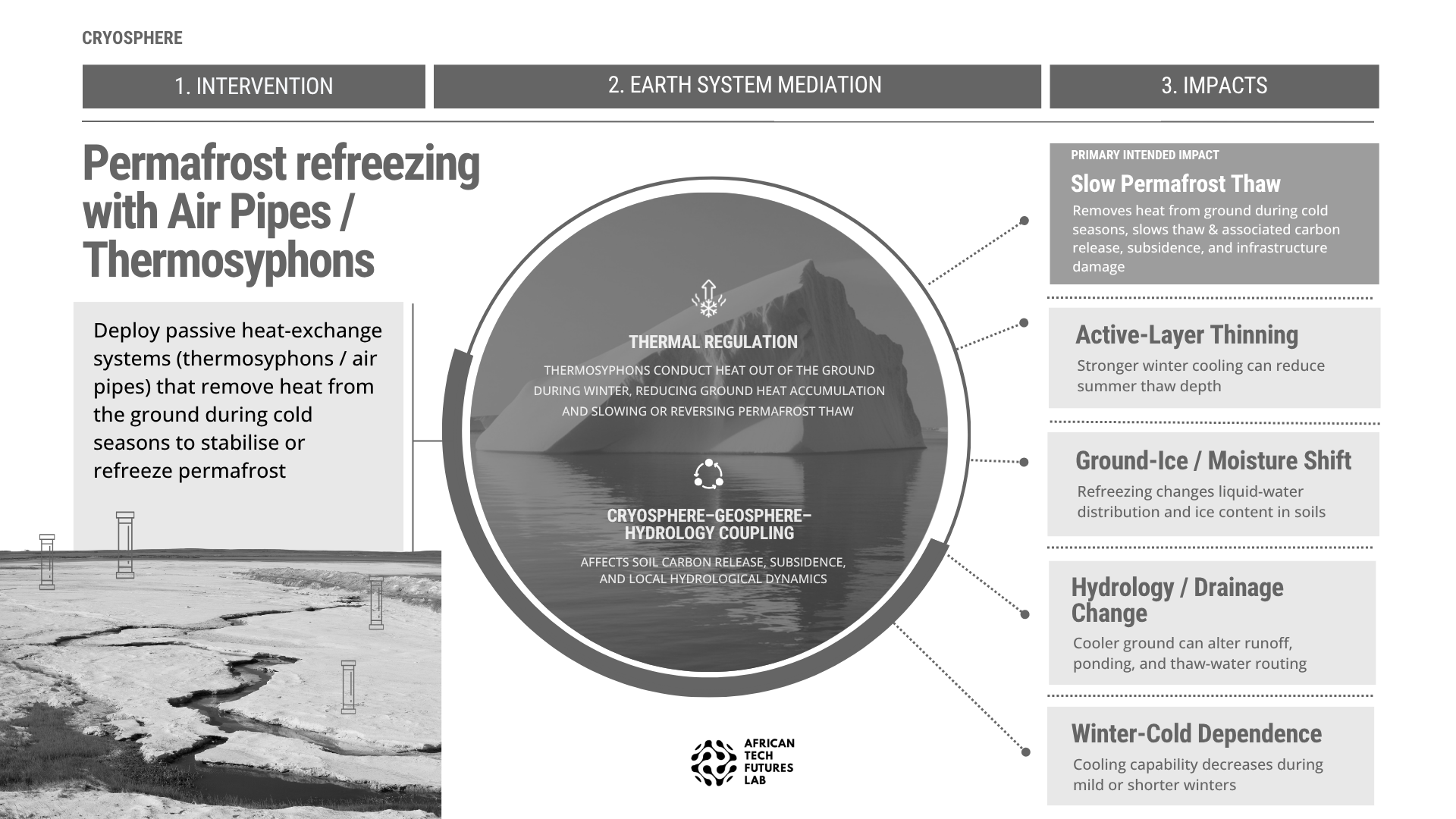
Permafrost refreezing with air pipes / thermosyphons
This climate intervention technique works by deploying passive heat-exchange systems (thermosyphons / air pipes) that remove heat from the ground during cold seasons to stabilise or refreeze permafrost, and it would be mediated by the following key Earth systems: Thermal Regulation and Cryosphere–Geosphere–Hydrology Coupling. A number of impacts and outcomes would be co-produced, including Slow Permafrost Thaw, Active-Layer Thinning, Ground-Ice / Moisture Shift, Hydrology / Drainage Change, and Winter-Cold Dependence.
-
![]()
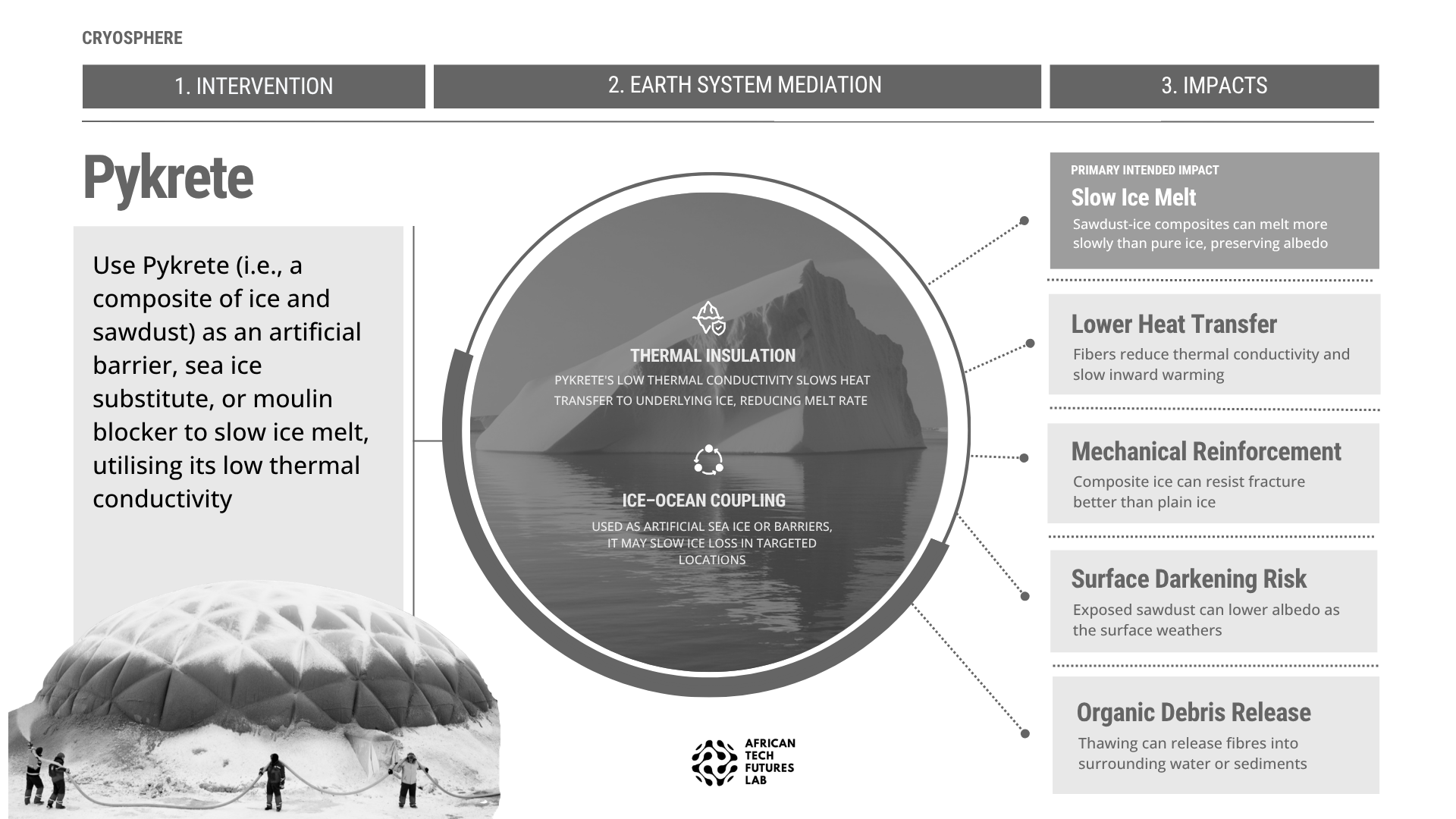
Pykrete
This climate intervention technique works by using Pykrete (i.e., a composite of ice and sawdust) as an artificial barrier, sea ice substitute, or moulin blocker to slow ice melt, utilising its low thermal conductivity, and it would be mediated by the following key Earth systems: Thermal Insulation and Ice–Ocean Coupling. A number of impacts and outcomes would be co-produced, including Slow Ice Melt, Lower Heat Transfer, Mechanical Reinforcement, Surface Darkening Risk, and Organic Debris Release.
-
![]()
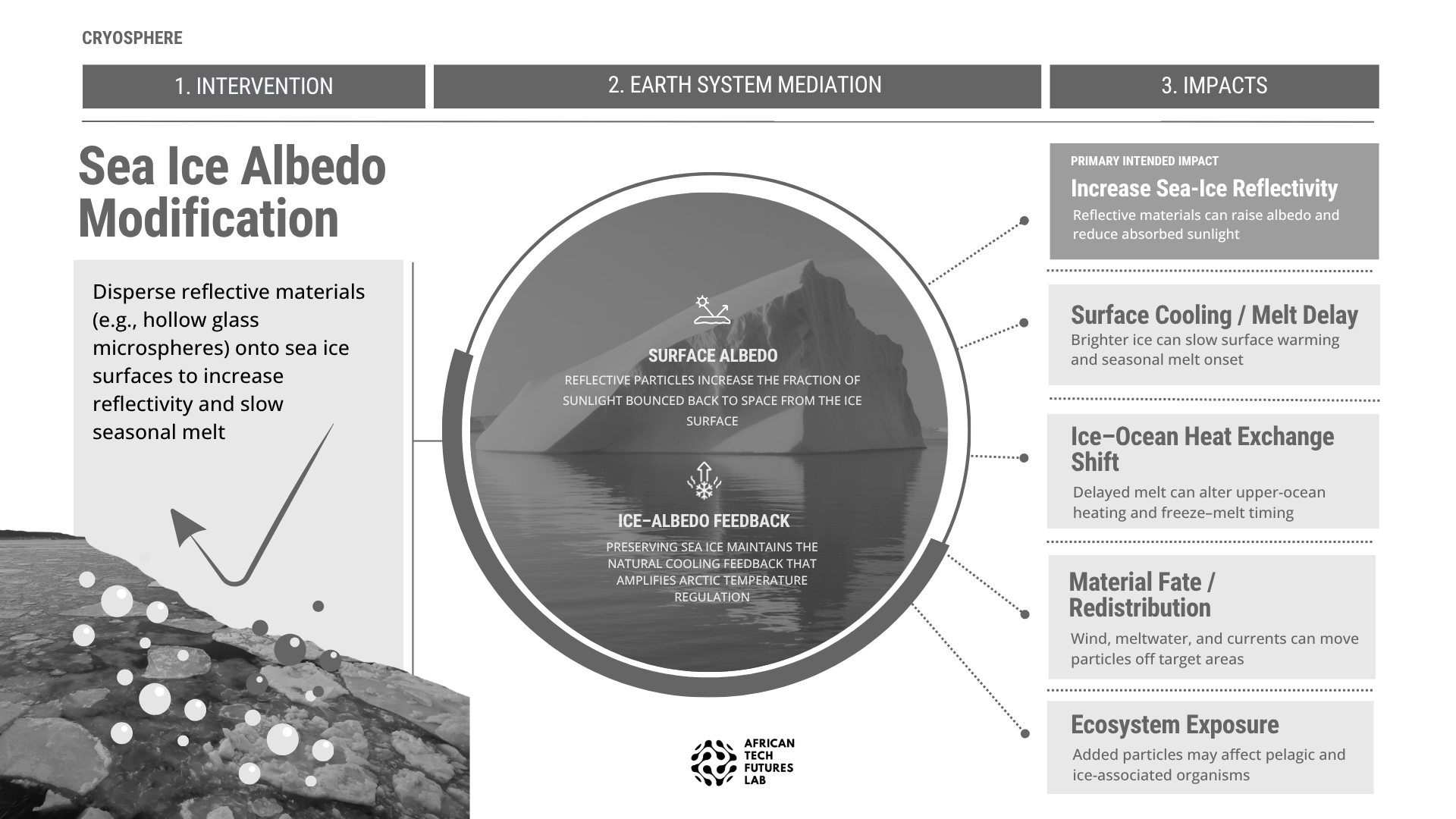
Sea Ice Albedo Modification
This climate intervention technique works by dispersing reflective materials (e.g., hollow glass microspheres) onto sea ice surfaces to increase reflectivity and slow seasonal melt, and it would be mediated by the following key Earth systems: Surface Albedo and Ice–Albedo Feedback. A number of impacts and outcomes would be co-produced, including Increase Sea-Ice Reflectivity, Surface Cooling / Melt Delay, Ice–Ocean Heat Exchange Shift, Material Fate / Redistribution, and Ecosystem Exposure.
-
![]()
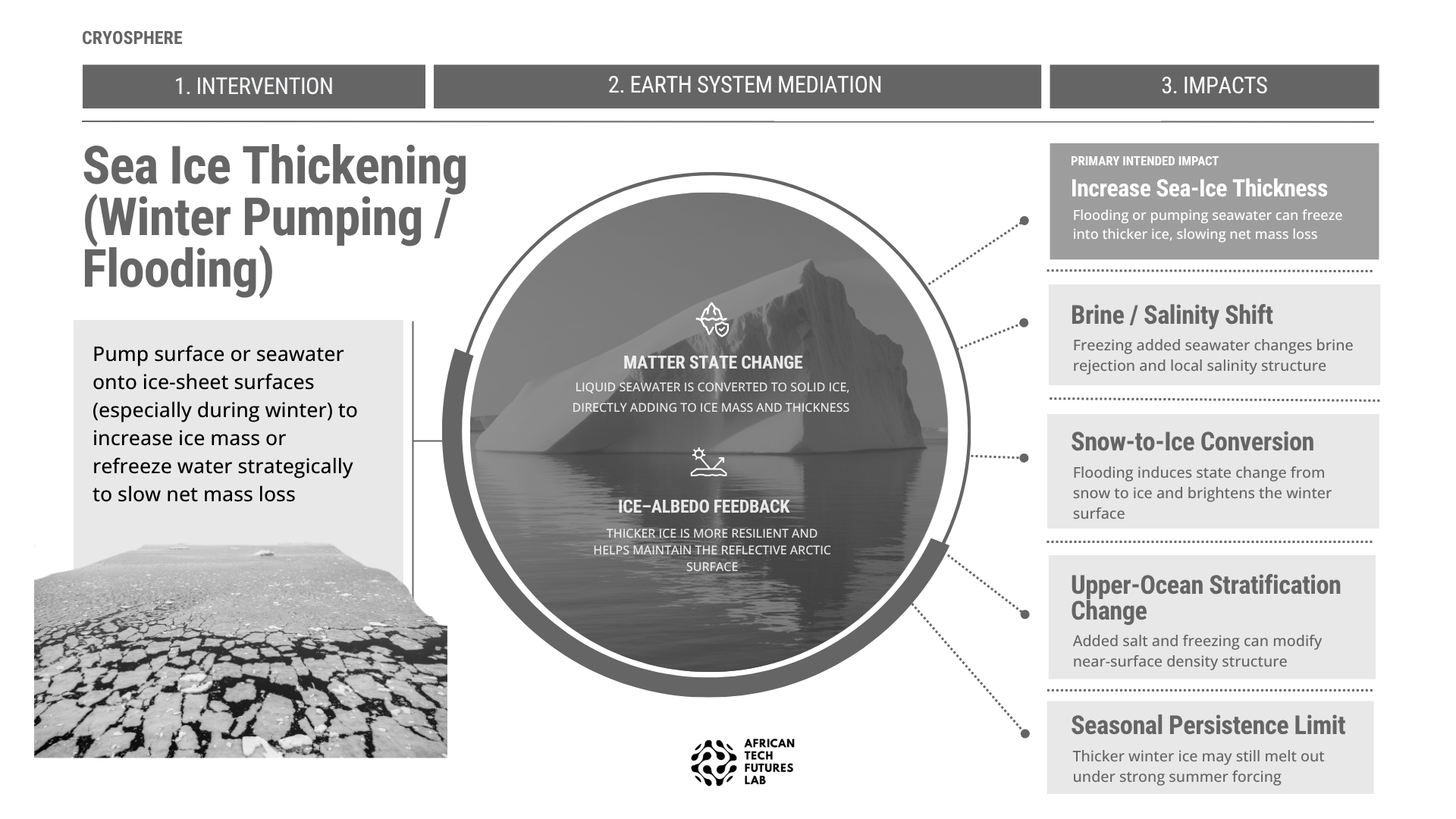
Sea Ice Thickening (winter pumping / flooding)
This climate intervention technique works by pumping surface or seawater onto ice-sheet surfaces (especially during winter) to increase ice mass or refreeze water strategically to slow net mass loss, and it would be mediated by the following key Earth systems: Matter State Change and Ice–Albedo Feedback. A number of impacts and outcomes would be co-produced, including Increase Sea-Ice Thickness, Brine / Salinity Shift, Snow-to-Ice Conversion, Upper-Ocean Stratification Change, and Seasonal Persistence Limit.
-
![]()
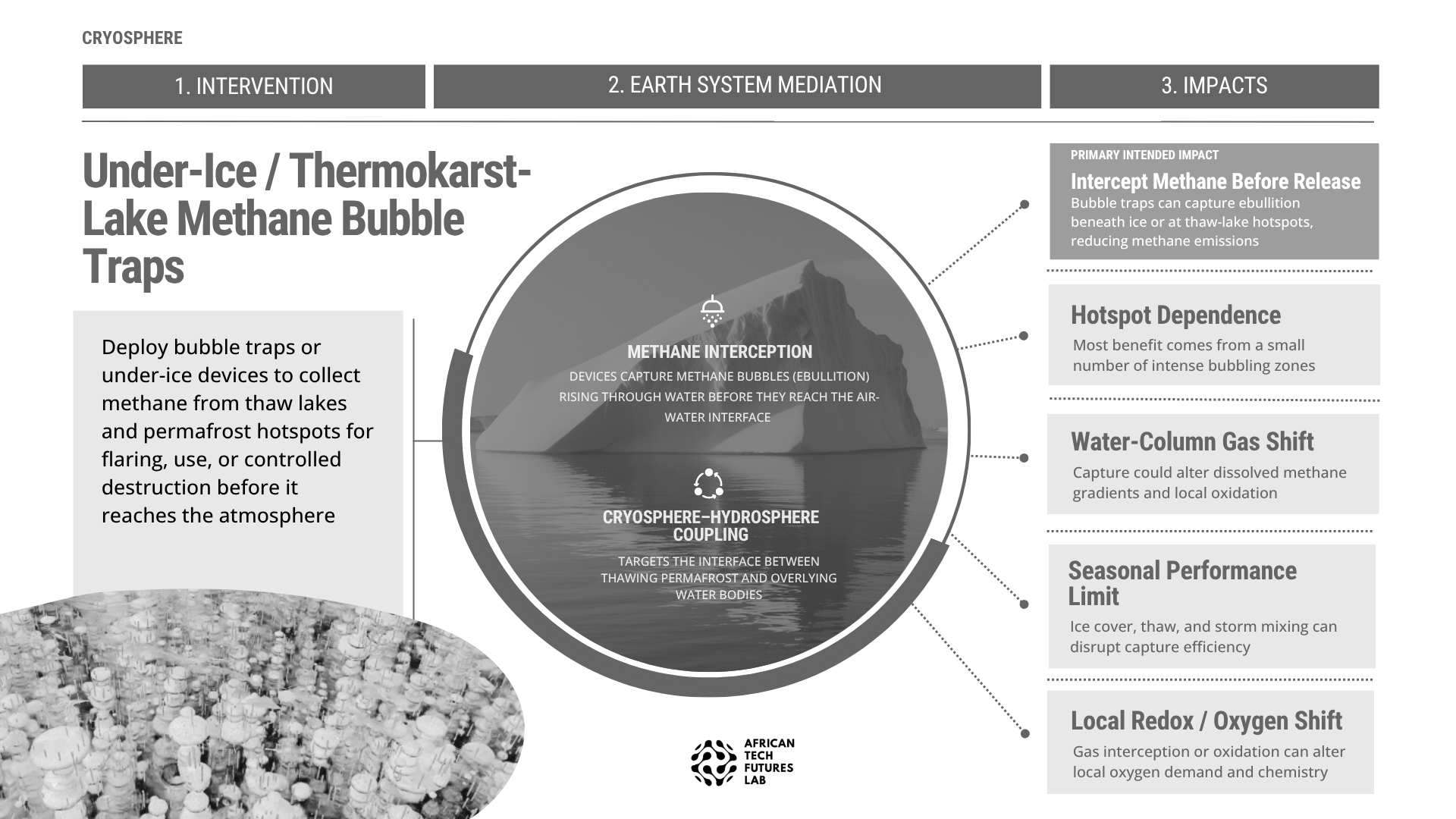
Under-ice / Thermokarst-lake Methane Bubble Traps
This climate intervention technique works by deploying bubble traps or under-ice devices to collect methane from thaw lakes and permafrost hotspots for flaring, use, or controlled destruction before it reaches the atmosphere, and it would be mediated by the following key Earth systems: Methane Interception and Cryosphere–Hydrosphere Coupling. A number of impacts and outcomes would be co-produced, including Intercept Methane Before Release, Hotspot Dependence, Water-Column Gas Shift, Seasonal Performance Limit, and Local Redox / Oxygen Shift.

Previous
Previous
Hydrosphere
Next
Next