Africa's emerging carbon dioxide removal (CDR) sector is often discussed in broad terms, from its potential to deliver climate benefits to concerns about its costs, risks, and competing priorities. But these generalizations can obscure important differences between technologies, local contexts, and ultimate goals.
Drawing on our research for The Future of Carbon Dioxide Removal in Africa, we identify nine common assumptions about CDR and the more useful questions policymakers, researchers, and investors should be asking instead.
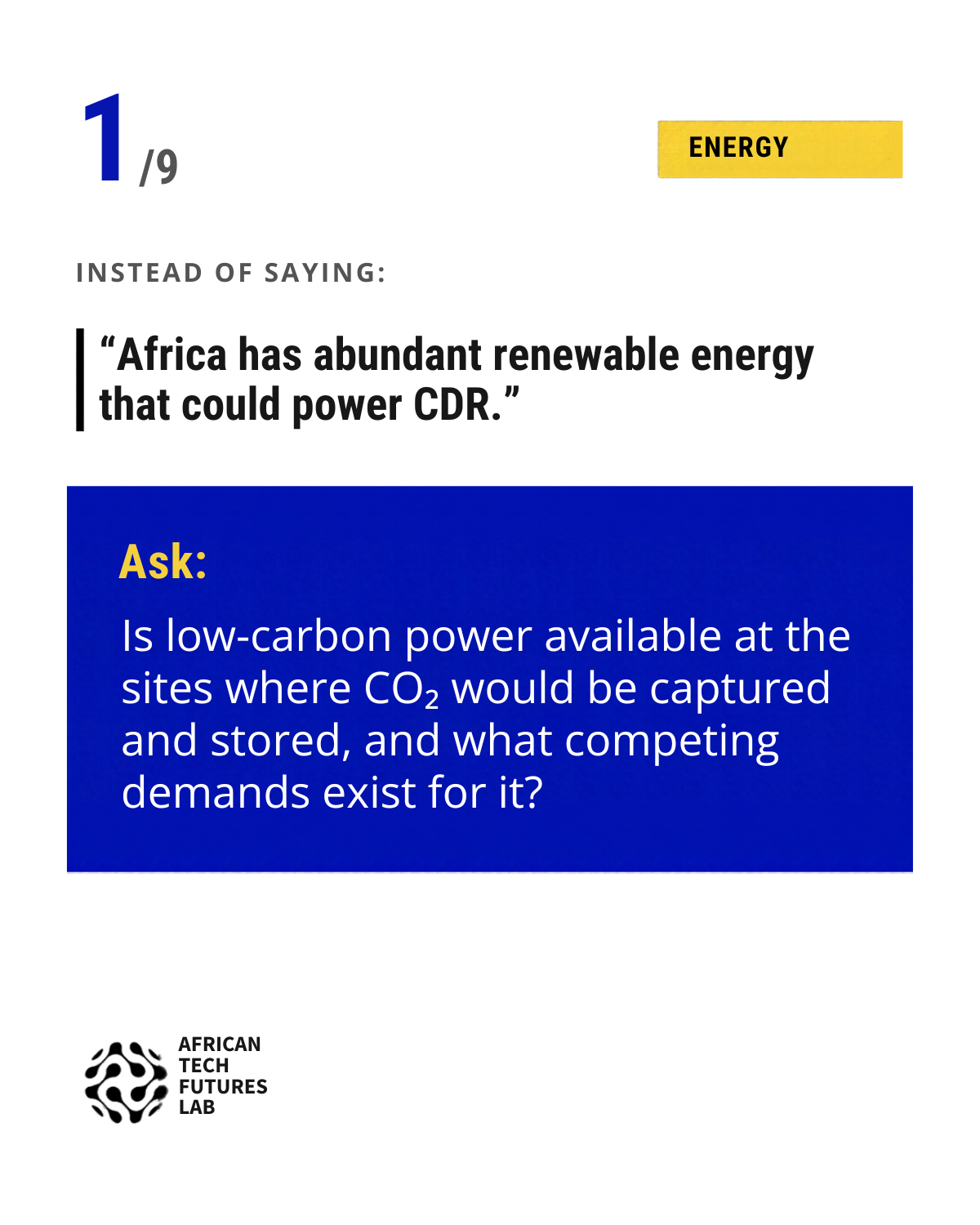
Instead of saying: “Africa has abundant renewable energy that could power CDR.”
ASK
Is low-carbon power available at the sites where CO₂ would be captured and stored, and what competing demands exist for it?
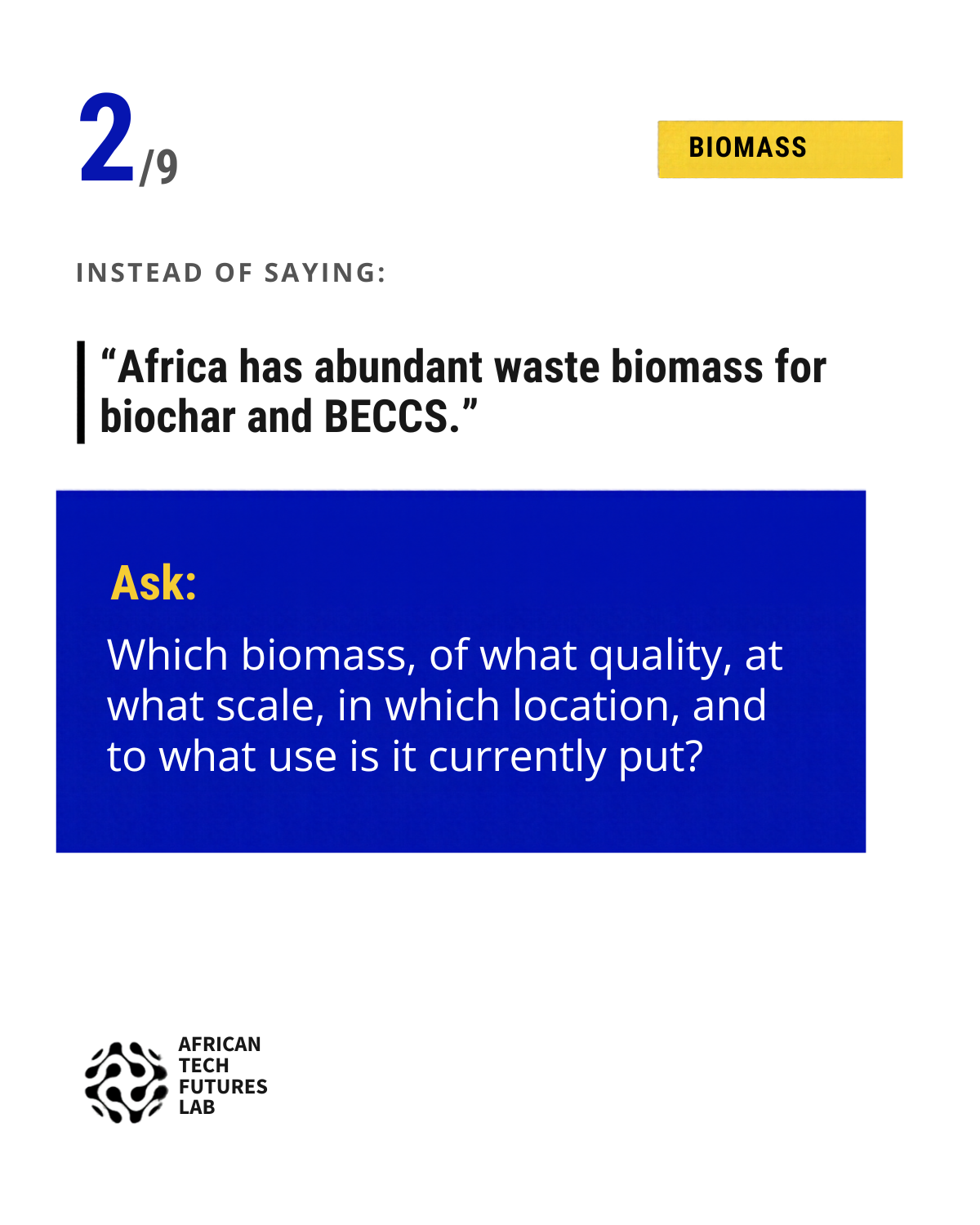
Instead of saying: “Africa has abundant waste biomass for biochar and BECCS.”
ASK
Which biomass, of what quality, at what scale, in which location, and to what use is it currently put?
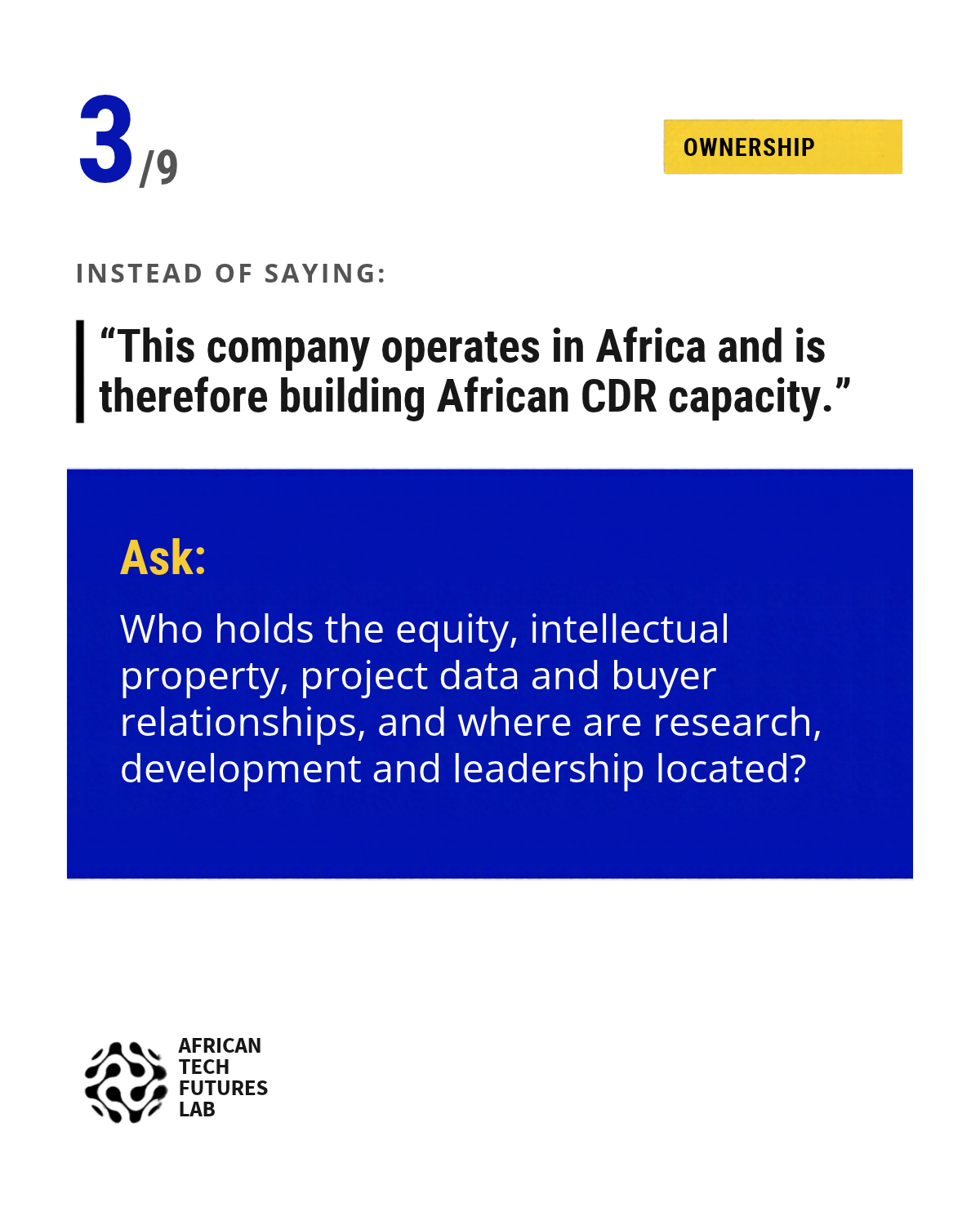
Instead of saying: “This company operates in Africa and is therefore building African CDR capacity.”
ASK
Who holds the equity, the intellectual property, the project data and the buyer relationships, and where are research, development and leadership located?
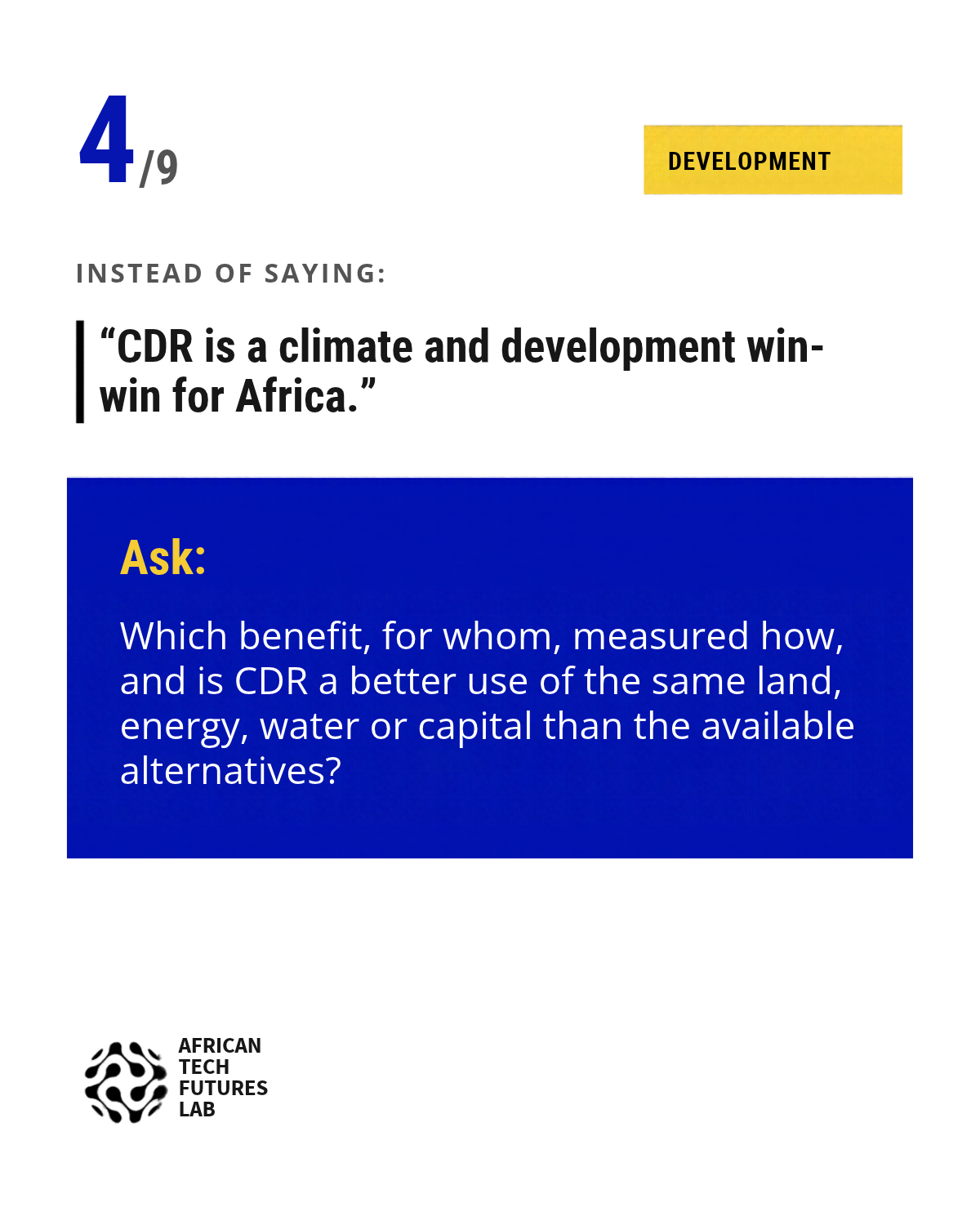
Instead of saying: “CDR is a climate and development win-win for Africa.”
ASK
Which benefit, for whom, measured how, and is CDR a better use of the same land, energy, water or capital than the available alternatives?
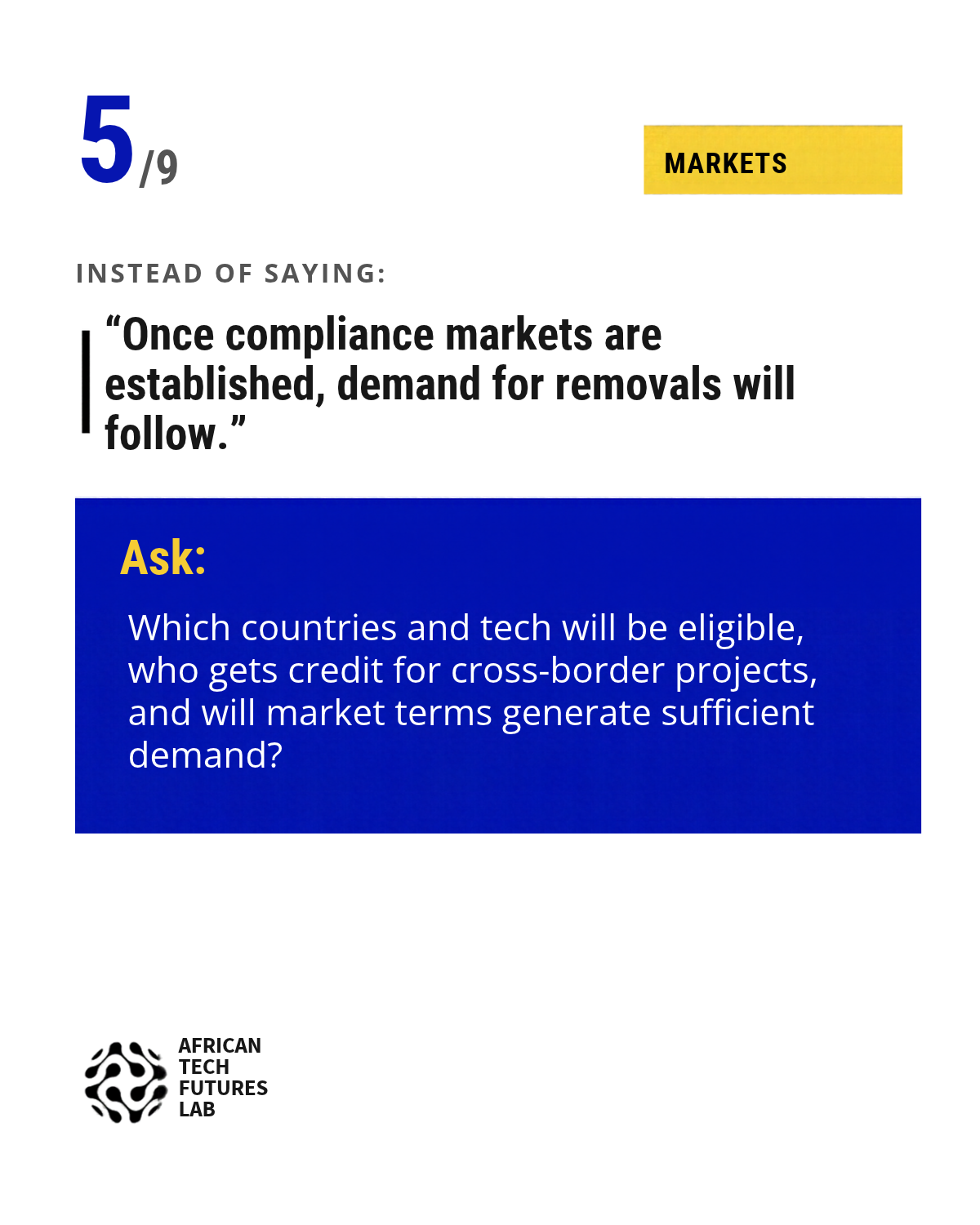
Instead of saying: “Once compliance carbon markets are established, demand for removals will follow.”
ASK
Which countries and tech will be eligible, who gets credit for cross-boarder projects, and will market terms generate sufficient demand?
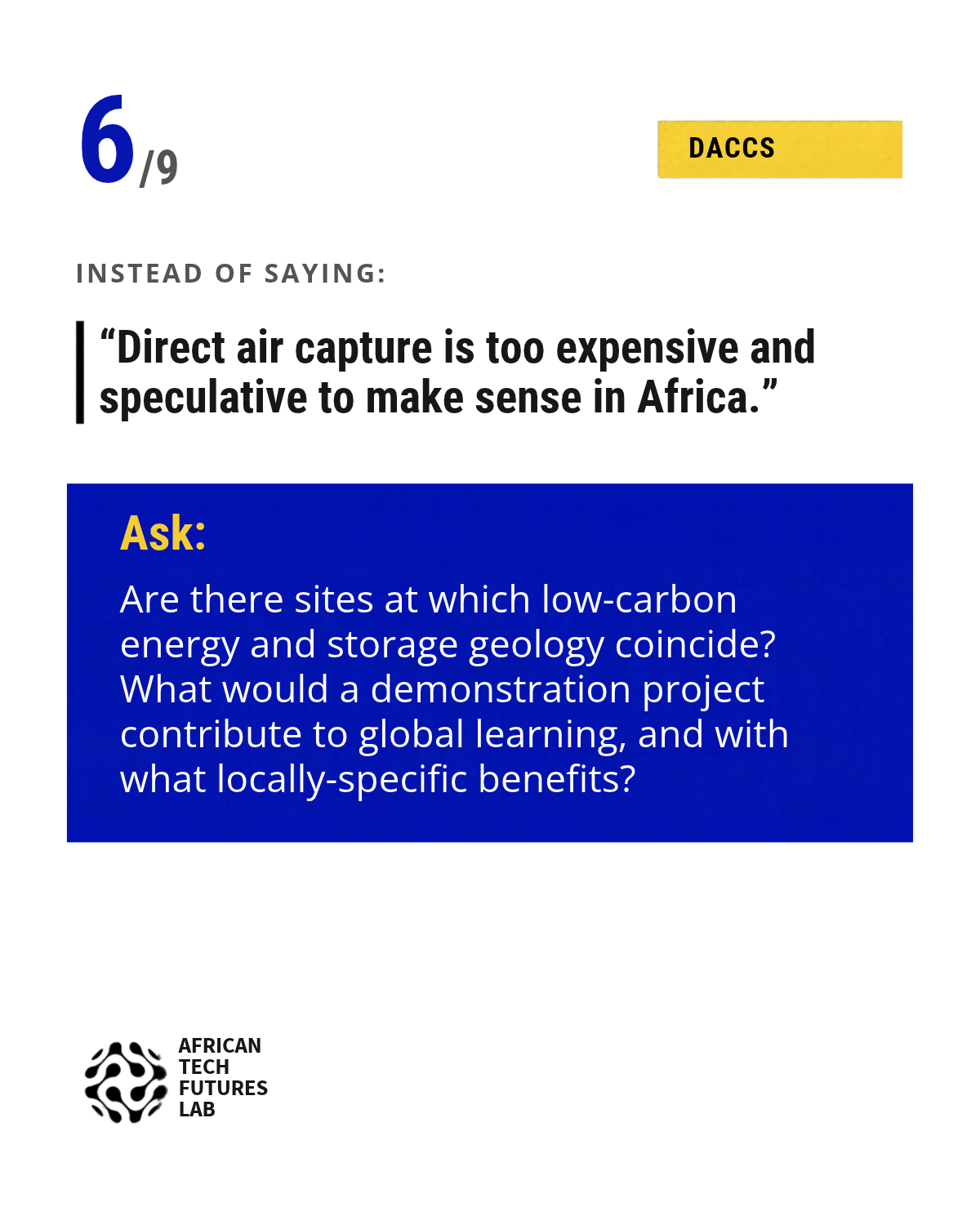
Instead of saying: “Direct air capture is too expensive and speculative to make sense in Africa.”
ASK
Are there sites at which low-carbon energy and storage geology coincide, what would a demonstration project contribute to global learning and with what locally-specific benefits?
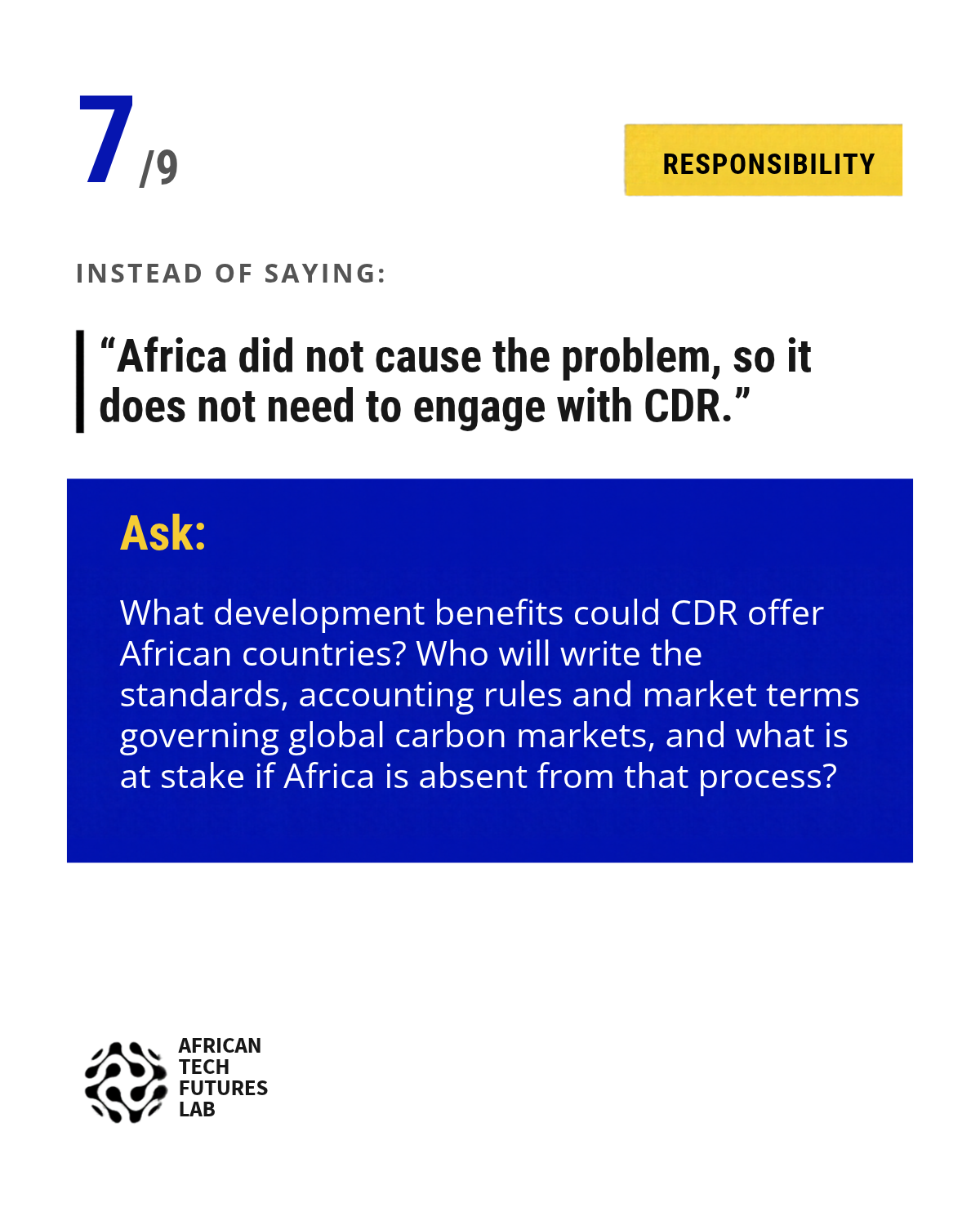
Instead of saying: “Africa did not cause the climate problem, so it does not need to engage with CDR.”
ASK
What development benefits could CDR offer African countries? Who will write the standards, accounting rules and market terms governing global carbon markets, and what is at stake if Africa is absent from that process?
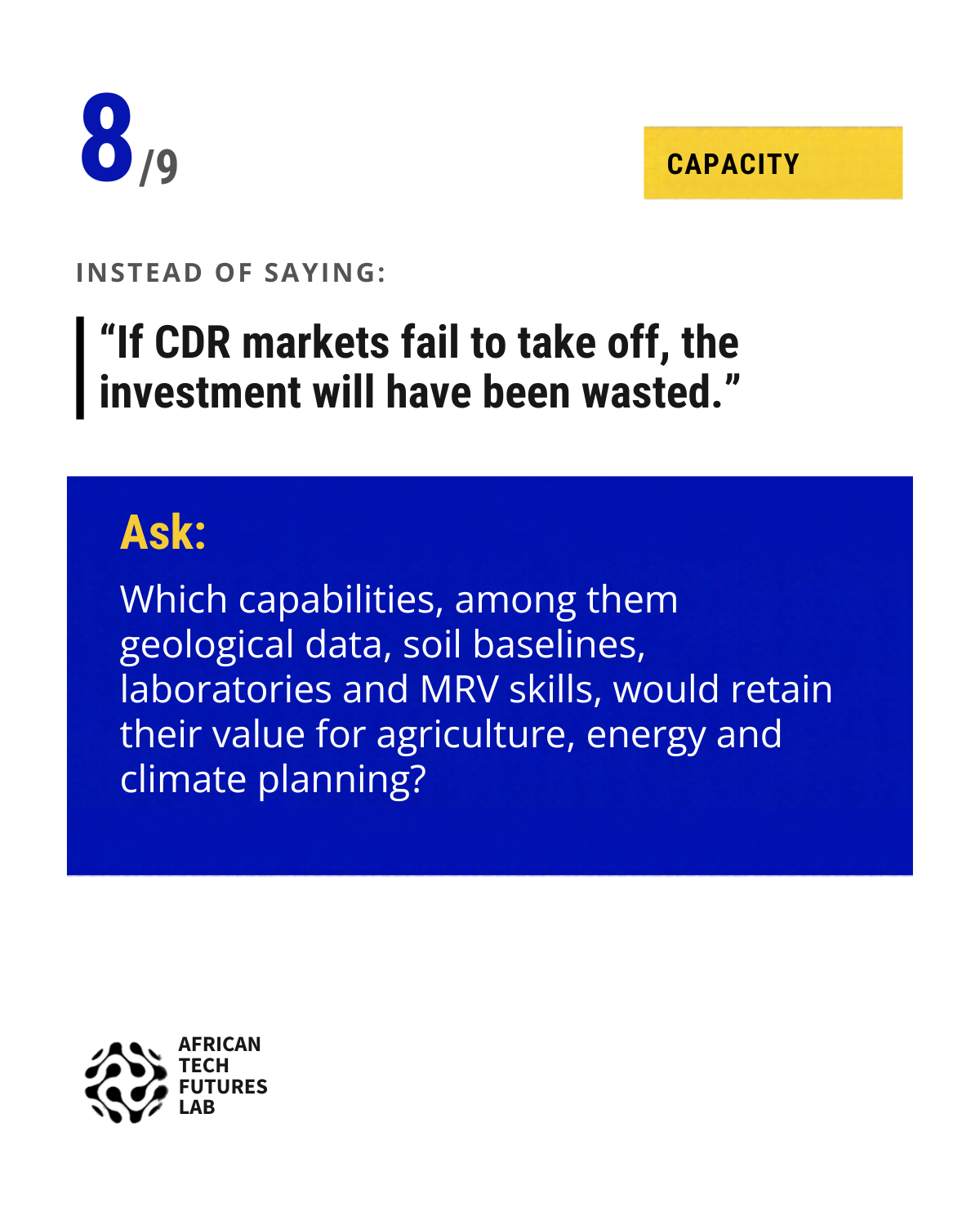
Instead of saying: “If CDR markets fail to take off, the investment will have been wasted.”
ASK
Which capabilities, among them geological data, soil baselines, laboratories and MRV skills, would retain their value for agriculture, energy and climate planning?
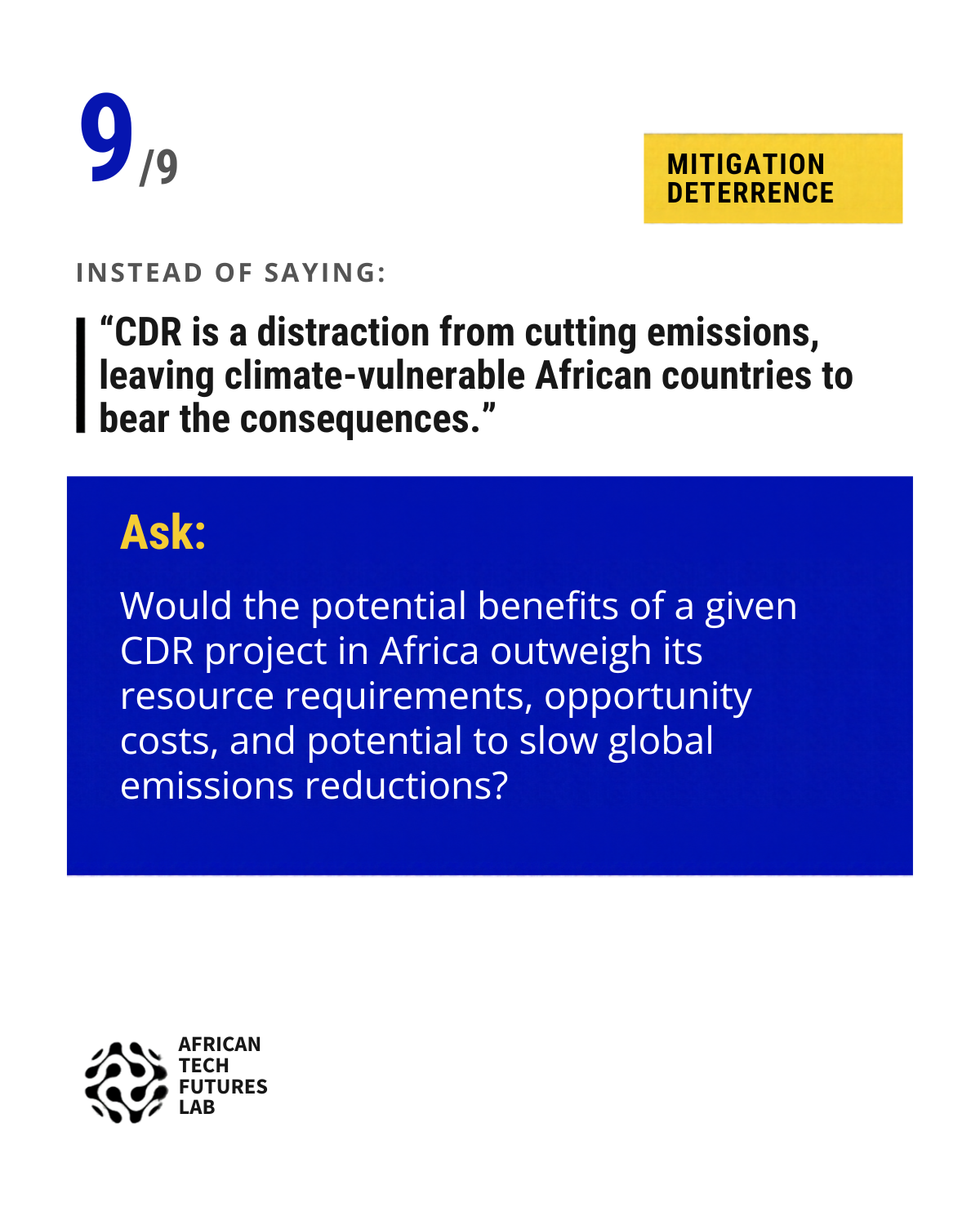
Instead of saying: “CDR is a distraction from cutting emissions, leaving climate-vulnerable African countries to bear the consequences.”
ASK
Would the potential benefits of a given CDR project in Africa outweigh its resource requirements, opportunity costs, and potential to slow global emissions reductions?